


Understanding the Limitations of Conventional Trade Balances
Conventional assessments of international trade balances often fail to capture the full extent of a nation’s economic strength, particularly when intangible assets such as intellectual property, brand value, and technology licensing are involved. This discrepancy is especially evident in the case of the United States, whose trade deficits with major partners like Germany and China mask underlying economic advantages.
The Impact of Intangible Assets on U.S. Trade Deficits
Historical analyses by economists Ricardo Hausmann and Federico Sturzenegger have highlighted the concept of “dark matter”—intangible factors that significantly influence the valuation of external imbalances. In the U.S. context, many goods imported by partners such as Germany and China are embedded with intellectual property owned by American companies, yet these values are not fully reflected in trade statistics.
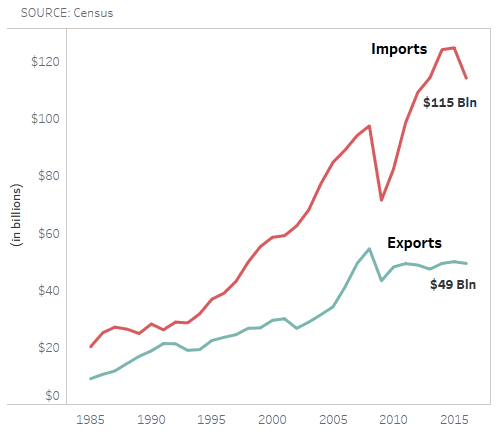
For instance, while the United States imports a substantial volume of goods from Germany, including automobiles, aircraft, pharmaceuticals, and chemicals, exports to Germany remain comparatively lower in dollar terms. In 2023, U.S. imports from Germany stood at approximately $170 billion, whereas exports to Germany were around $77 billion. Part of the U.S. export figure is bolstered by liquefied natural gas shipments, yet the imbalance persists.
Technology Licensing and Profit Flows Beyond Trade Data
Beyond physical goods, the U.S. economy benefits significantly from licensing fees and intellectual property revenues. Products manufactured abroad, such as Android smartphones assembled in China and exported to Europe, generate licensing income for U.S. firms like Google. Similarly, Apple’s iPhones, produced by Foxconn in China, yield minimal manufacturing margins for the assembler, while the bulk of profits accrue to Apple itself.
These intangible revenue streams—spanning software, patents, trademarks, and digital media—do not appear in traditional trade statistics. For example, software products like Microsoft Windows and Office or digital content from companies such as Netflix are delivered electronically, bypassing physical trade flows entirely. Consequently, the U.S. trade deficit with countries like Germany and China does not accurately reflect the true economic value generated by American firms.
Implications for Economic and Strategic Competitiveness
The underrepresentation of intangible assets in trade data has strategic implications. It suggests the United States maintains a more robust economic position than conventional trade balances indicate, particularly in sectors driven by innovation, intellectual property, and digital services. This dynamic underscores the importance of considering non-tangible factors when evaluating national economic strength and trade relationships.
For policymakers and industry leaders, recognizing the role of these intangible contributions is critical for shaping trade policy, investment decisions, and industrial strategy. It also highlights the need for advanced metrics that better capture the complexity of modern global value chains and the distribution of economic gains.
Can you afford not to expand abroad Talk to us, we’ll help you grow your business internationally.
Talk to us →