


Introduction to China’s Renewable Energy Ambitions
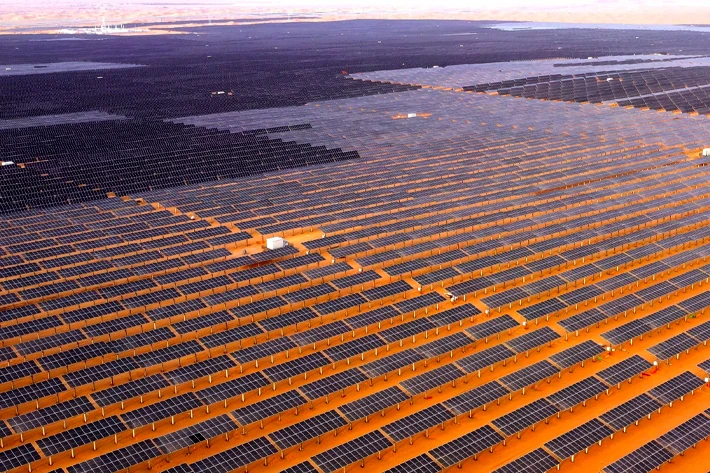
China’s inauguration of the world’s largest solar power installation in the desert region near Urumqi, the capital of Xinjiang, marks a pivotal development in the global shift toward sustainable energy sources. With an installed capacity of 3.5 gigawatts spanning nearly 33,000 hectares, this facility produces approximately 6.09 billion kilowatt-hours annually—sufficient to meet the electricity needs of a country like Papua New Guinea for a year. Operated by the Power Construction Corporation of China, this project exemplifies China’s commitment to scaling renewable energy production to meet its growing domestic demand and reduce carbon emissions.
Strategic Significance of Xinjiang’s Geographical Advantages
The selection of Xinjiang for this project leverages the region’s abundant solar irradiance and expansive land availability, making it an ideal location for large-scale solar developments. This facility surpasses previous solar plants in western China, which typically achieved capacities around 3 gigawatts, signaling a deliberate strategic investment in renewable infrastructure. The generated electricity is transmitted over extensive distances to China’s economically vibrant eastern seaboard, where industrial growth and urbanization drive increasing energy consumption.
Implications for German and International Industry
For German enterprises specializing in renewable technologies, engineering, and advanced manufacturing, the Xinjiang solar project represents more than an engineering milestone; it is an indicator of emerging market dynamics and collaboration potential. The complexity of constructing and maintaining a solar power plant of this magnitude necessitates a comprehensive ecosystem of components and services, including high-efficiency solar modules, advanced inverters, smart grid technologies, and digital optimization platforms. German firms, recognized for their precision engineering and innovation, are well positioned to contribute through component supply, joint ventures with Chinese companies, and tailored technological solutions.
Knowledge Transfer and Market Engagement Opportunities
China’s renewable energy expansion offers valuable insights for international stakeholders, particularly in integrating large-scale solar generation into existing grid infrastructures. German companies could benefit from targeted market intelligence efforts, such as deploying small teams to key Chinese cities like Shanghai and Beijing to assess local conditions and establish networks. Experiences from other sectors demonstrate that such incremental, research-driven approaches can facilitate successful market entry and partnership development.
Challenges and Strategic Considerations
Engaging with the Chinese renewable energy market involves navigating regulatory complexities and cultural differences. A cautious, phased strategy—emphasizing thorough market analysis, pilot initiatives, and strategic alliances—can mitigate risks associated with direct investment. The Xinjiang solar project serves as a strategic vantage point for understanding China’s trajectory in energy transformation and the broader implications for global energy markets.
Conclusion: Positioning for Future Growth
The Xinjiang solar power plant is emblematic of China’s broader ambitions to lead in renewable energy infrastructure development. For German and other international companies, this represents both a challenge and an opportunity to integrate their technological expertise within China’s expanding energy ecosystem. As global energy markets evolve, maintaining engagement with key projects like Xinjiang will be critical for sustaining innovation, competitive advantage, and long-term industrial growth.
Can you afford not to expand abroad Talk to us, we’ll help you grow your business internationally.
Talk to us →