


Introduction: A Paradigm Shift in Infrastructure Governance
In May 2024, Brazil enacted a transformative regulation that redefines the operational framework for data centers within its borders. Unlike conventional policies focused solely on sustainability or green credentials, this mandate compels operators of data centers to generate their own electricity, effectively integrating energy production into digital infrastructure. This development, while underreported in mainstream technology discourse, signals a fundamental recalibration in how AI investments and data center operations will evolve in Latin America and potentially worldwide.
Energy Demands of AI and the Limits of Traditional Grids
Modern artificial intelligence workloads, particularly inference clusters, impose unprecedented power requirements on data centers, consuming between 10 and 50 megawatts continuously. Such demand is comparable to the electricity consumption of small cities, placing extraordinary stress on national grids designed for stable, predictable industrial loads. Brazil’s energy system, heavily reliant on hydropower (accounting for 70 to 80 percent of supply), faces additional risks from seasonal droughts that exacerbate grid instability. Introducing large, variable data center loads without direct control over energy sources threatens not only cost volatility but also the security of the power supply.
Brazil’s Energy Autarky Mandate: A Strategic Response
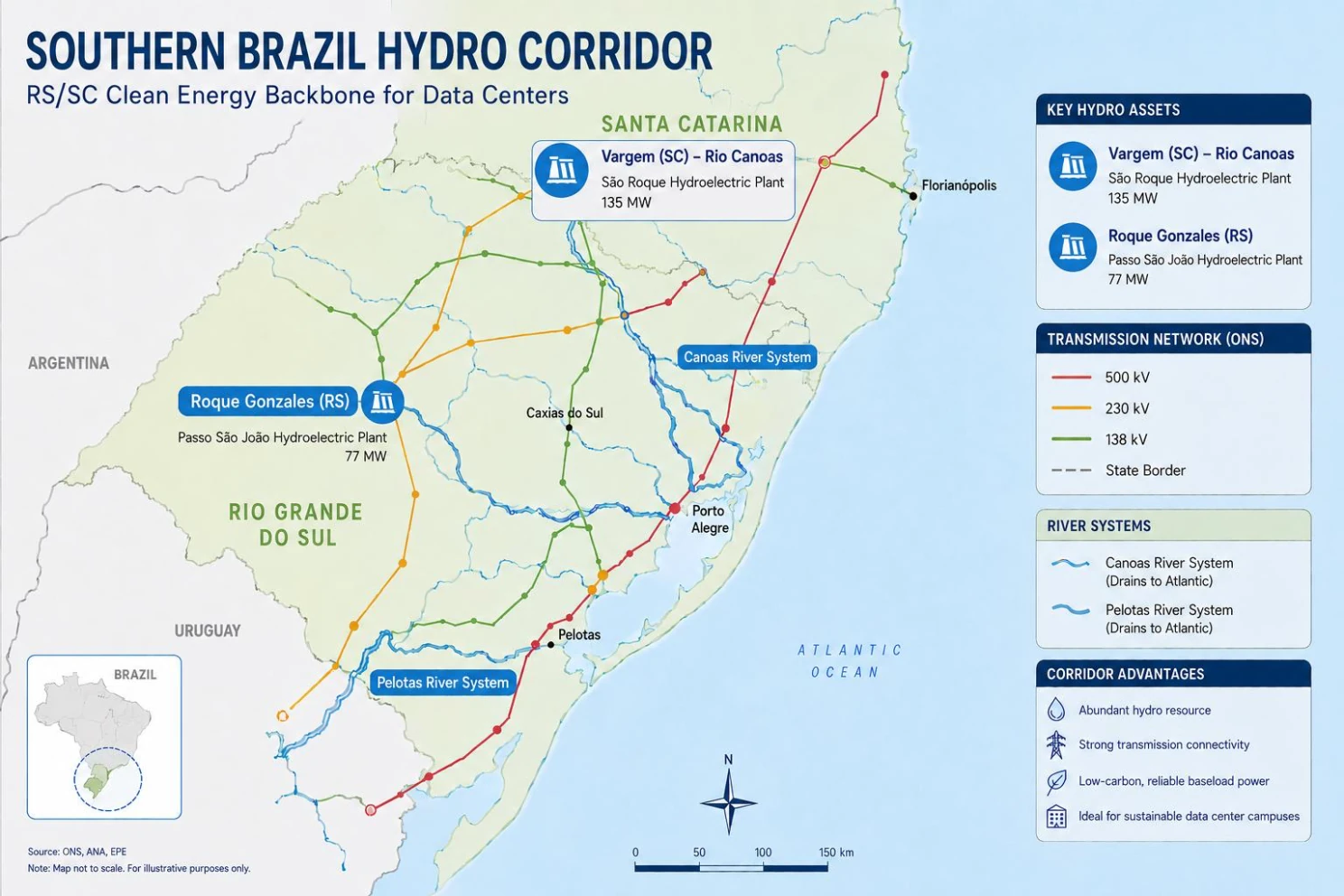
In response to these challenges, Brazil has adopted a policy of energy self-sufficiency for data center operators. This approach requires data centers to construct and operate dedicated power generation facilities, often utilizing run-of-river hydropower plants. Such installations provide a stable, continuous energy supply with a reduced environmental footprint compared to traditional dam-based hydropower, enhancing operational resilience and aligning energy consumption with production.
Economic and Operational Implications for Data Center Operators
From a financial perspective, the investment in a 20-megawatt run-of-river hydropower plant in southern Brazil entails capital expenditures of approximately $60 to $65 million. Regions like the Paraná River basin offer favorable conditions, including proven technology, local engineering expertise, and consistent water flow year-round. Although initial capital deployment represents a significant commitment, the long-term cost structure becomes advantageous. After the construction phase, typically spanning four years, operators can amortize the investment over the subsequent eight years, leveraging current grid electricity prices of $45 to $60 per megawatt-hour. Beyond the amortization period, the cost of energy production stabilizes at a levelized cost of electricity between $35 and $45 per megawatt-hour, insulating operators from market volatility and drought-related surcharges.
Global Implications and the Future of Data Center Energy Strategy
Brazil’s regulatory framework serves as an early indicator for global trends, with regions such as the European Union and Southeast Asia actively discussing similar requirements for energy self-sufficiency in digital infrastructure. For hyperscale operators managing capacities exceeding 100 megawatts, ownership and control over energy generation will transition from a cost-saving measure to a fundamental operational necessity. While run-of-river hydropower presents a geographically contingent solution, its applicability in suitable locations offers a replicable model combining environmental sustainability with strategic energy autonomy.
Conclusion: Data Centers as Integrated Energy Managers
Looking ahead to 2030, data centers will no longer function as passive consumers within broader energy networks. Instead, they will emerge as sophisticated energy managers, balancing power generation and consumption alongside data processing. For industry leaders and infrastructure investors, the critical question shifts from energy pricing to energy ownership. In the competitive landscape of AI dominance, those entities capable of securing and controlling their own power sources will hold a decisive strategic advantage.
Can you afford not to expand abroad Talk to us, we’ll help you grow your business internationally.
Talk to us →