


US Tariff Threats and Their Implications for European Economies
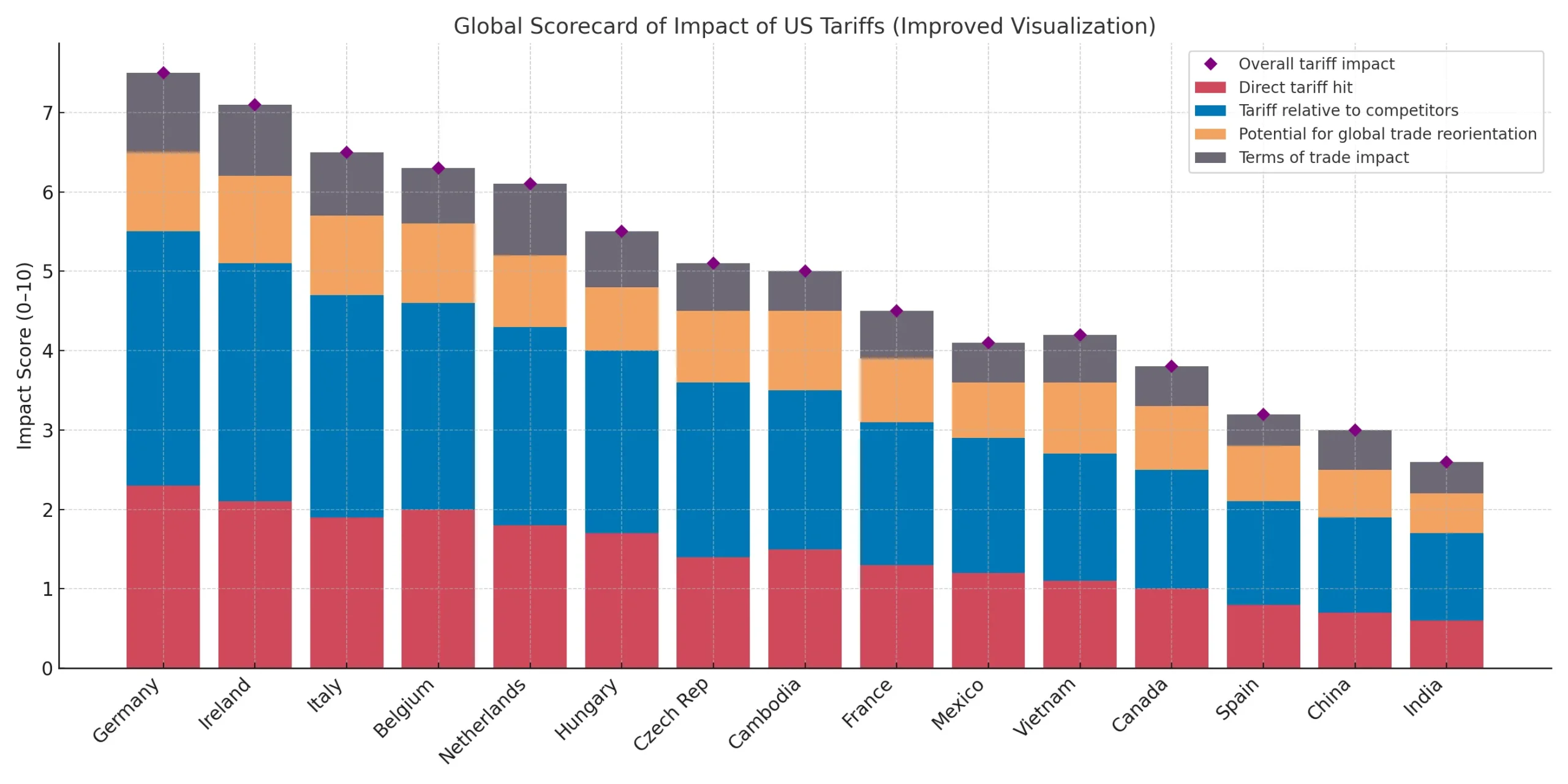
US President Donald Trump’s announcement of a potential 50% tariff increase on goods imported from the European Union has introduced renewed volatility into international markets. This escalation, if enacted, would disproportionately affect EU member states with significant trade exposure to the United States, thereby amplifying economic vulnerabilities within the bloc.
Economic Vulnerability of Germany and Ireland
According to a comprehensive assessment by Oxford Economics, Germany and Ireland emerge as the most susceptible economies to these tariff adjustments. Gabriel Sterne, head of emerging markets research at Oxford Economics, highlights that EU countries with a high ratio of exports to the US relative to their gross domestic product would bear the brunt of the tariff impact. This analysis is grounded in a ranking of 60 economies evaluating their exposure to existing and prospective US tariffs.
Broader Economic Consequences and Market Uncertainty
While the implementation of these tariff increases remains uncertain and is widely interpreted as a negotiating strategy, the mere anticipation has already exerted downward pressure on global economic activity. The uncertainty surrounding trade policies complicates business planning and investment decisions, potentially slowing growth across interconnected markets.
Potential Strategic Shifts in Global Trade Patterns
Interestingly, the evolving tariff landscape may inadvertently benefit China by encouraging a reorientation of global trade flows. As European exporters face heightened barriers to the US market, alternative supply chain configurations and trade partnerships could emerge, potentially enhancing China’s role in international commerce.
Can you afford not to expand abroad Talk to us, we’ll help you grow your business internationally.
Talk to us →