


Introduction: A Shift in Brazil’s Automotive Market Dynamics
For decades, Brazil’s automotive sector was predominantly influenced by American, European, Japanese, and South Korean manufacturers, with brands such as Volkswagen, Fiat, General Motors, and Toyota shaping the market. Chinese automakers were largely absent from serious discussions about the future of mobility in Latin America. However, this landscape has undergone a significant transformation. By 2025, Chinese companies had become the leading force in Brazil’s market for electrified vehicles, with BYD alone accounting for approximately 72 percent of sales in this segment. Notably, six of the top ten electrified vehicle brands in Brazil were Chinese, signaling a rapid and profound industry shift.
The Accelerated Rise of Chinese Electric Vehicle Brands
The swift ascent of Chinese electric vehicle manufacturers in Brazil has surprised many observers, though the trend aligns with broader global developments. Over several years, Chinese firms have cultivated advantages in battery technology, vertical integration, scalable production, and cost efficiency. As electric vehicles became increasingly competitive on the international stage, Latin America emerged as a promising expansion market, with Brazil positioned at its core. The country’s status as the largest automotive market in the region, combined with its substantial industrial base and growing demand for electrified vehicles, made it a natural focal point for Chinese investment and market entry.
Strategic Importance of Brazil in China’s Automotive Expansion
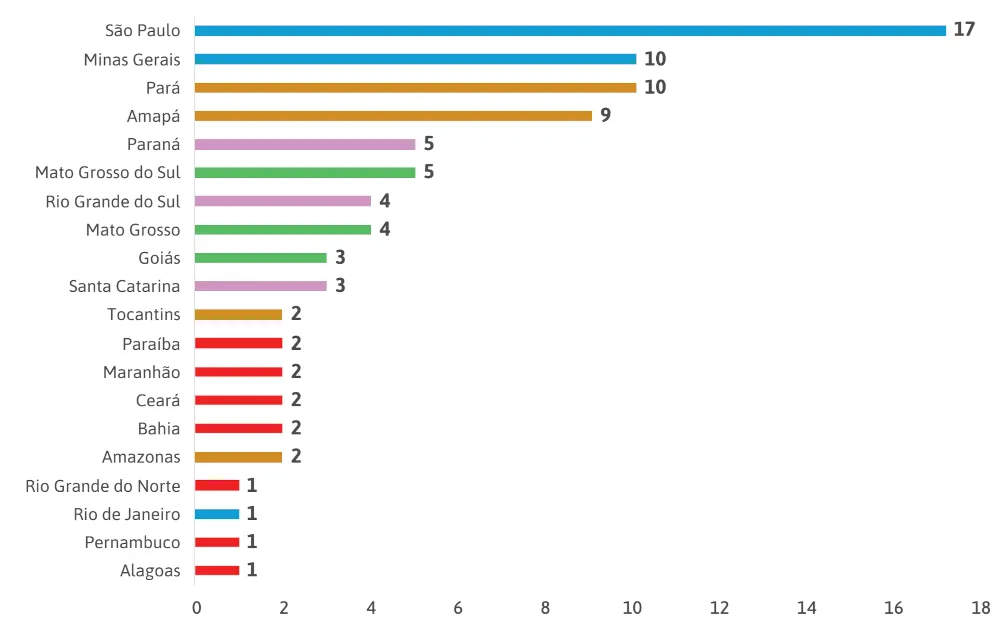
Brazil offers more than market size; it provides access to cleaner energy sources and proximity to critical mineral resources essential for battery manufacturing. Chinese companies have approached the Brazilian market with strategic intent, moving beyond export-focused models toward localized production and integration. Their investments are concentrated primarily in the state of São Paulo, reflecting a calculated approach to leveraging existing industrial infrastructure and supply chains.
Expansion of Local Production by BYD, GWM, and Geely
BYD exemplifies this strategy through its acquisition of a former Ford industrial complex in Bahia, commencing local production of electrified vehicles in 2025. This move symbolizes not only the entry of a new industry player but also the replacement of legacy manufacturing structures with a new generation of automotive production. Similarly, Great Wall Motors (GWM) expanded operations by utilizing a former Mercedes-Benz facility in São Paulo, while Geely deepened its Brazilian presence through a partnership with Renault, emphasizing local production and technology exchange. These initiatives underscore a commitment to embedding operations within the local industrial ecosystem.
Localization as a Core Strategic Pillar
Chinese manufacturers increasingly view Brazil not merely as a market for exports but as a production hub capable of serving domestic demand and broader regional markets. The complexity of Brazil’s tax system, regulatory environment, and logistical challenges necessitates a localized approach. Firms relying solely on imports often struggle to maintain competitiveness over time. Chinese companies appear cognizant of these factors, investing in local manufacturing capacity, supply chains, and after-sales infrastructure to solidify their market position.
Brand Development and Cultural Integration Efforts
Beyond production, Chinese automakers are actively cultivating brand recognition and consumer trust through targeted marketing campaigns and partnerships with Brazilian celebrities. BYD, for instance, promotes itself as integral to Brazil’s industrial future, while other firms engage in national marketing initiatives to enhance brand familiarity. This comprehensive localization extends to building dealer networks, service infrastructure, and relationships with local suppliers, reflecting a holistic market integration strategy.
Technological Advantage and Vertical Integration
The technological dimension is central to Chinese success in Brazil’s electric vehicle market. Chinese manufacturers benefit from strong control over battery supply chains, a critical component of electric vehicle production. China dominates much of the global battery ecosystem, from mineral processing to battery manufacturing capacity, providing these companies with significant cost and speed advantages. In contrast, Western automakers often contend with legacy organizational structures, longer development cycles, and fragmented supplier networks. Chinese firms’ agility allows them to adapt swiftly to market changes and maintain competitive edges.
Broader Industrial Implications and Supply Chain Opportunities
The expansion of Chinese electric vehicle production in Brazil extends its impact beyond vehicle sales. The electric vehicle sector demands new industrial ecosystems encompassing batteries, charging infrastructure, software integration, renewable energy, and mineral supply chains. As Chinese companies grow their footprint, they contribute to reshaping multiple Brazilian industries, creating opportunities for suppliers in automation, energy systems, chemicals, logistics, and infrastructure development.
Challenges Ahead
Despite the positive momentum, challenges remain. Brazil’s electric vehicle infrastructure, particularly charging networks, requires significant development. Local supplier ecosystems are still maturing, and economic volatility coupled with regulatory uncertainty poses ongoing risks. Additionally, trade policies may evolve in response to the rapid expansion of Chinese automotive exports and production, potentially complicating market dynamics.
Conclusion: China’s Emerging Role in Brazil’s Automotive Future
Chinese electric vehicle manufacturers have moved beyond peripheral roles to become central actors in Brazil’s automotive industry transformation. The developments in Brazil mirror shifts already underway in parts of Asia and Europe, where Chinese firms have transitioned from cost-focused entrants to formidable industrial competitors within remarkably short timeframes. Looking ahead, Brazil has the potential to become China’s principal production base for electric vehicles in Latin America, with significant implications for regional industrial patterns and competitive dynamics.
Can you afford not to expand abroad Talk to us, we’ll help you grow your business internationally.
Talk to us →