


Germany’s Unique Position in Industrial AI
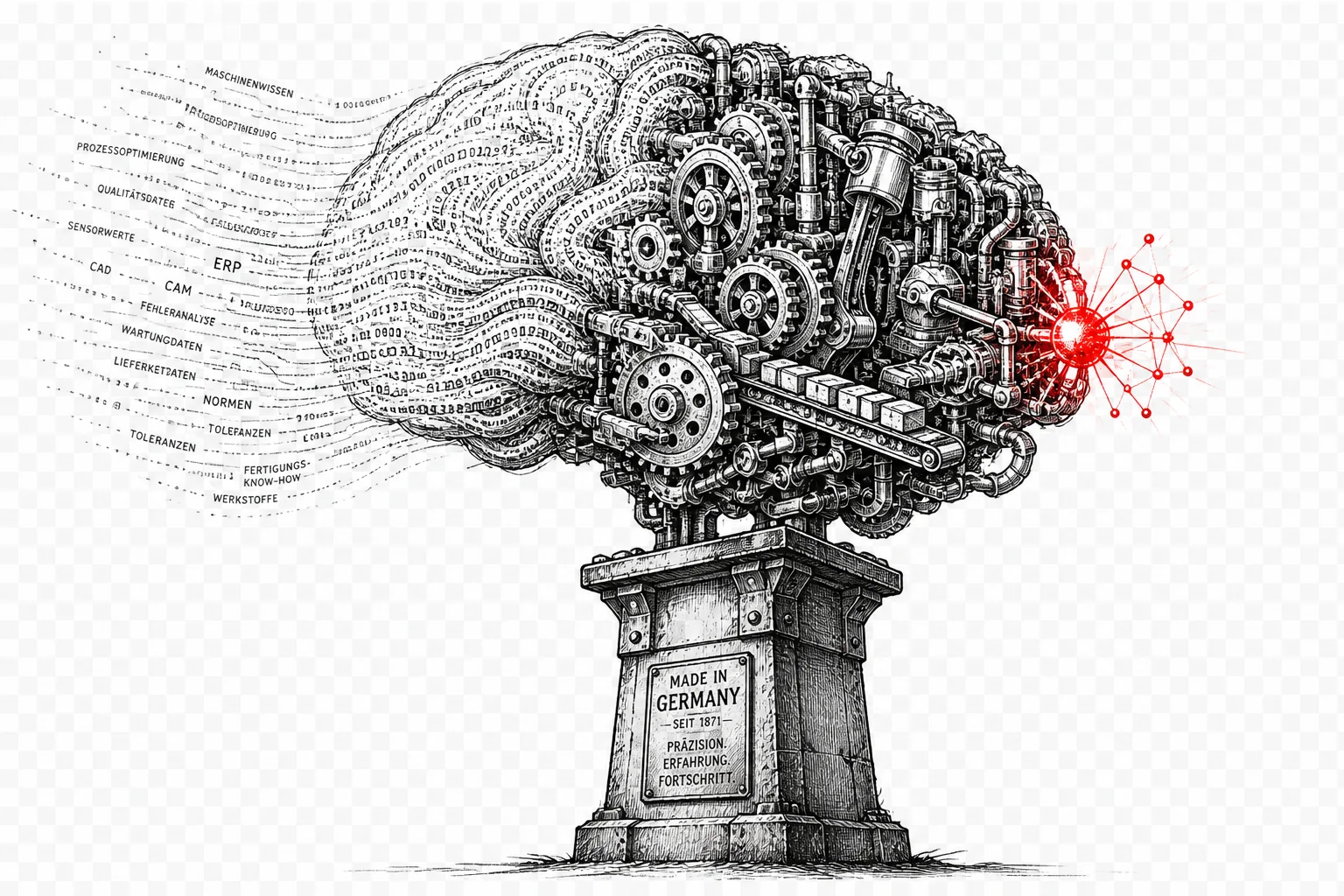
Contrary to narratives suggesting Germany is lagging behind in artificial intelligence, the country is experiencing a significant technological surge rooted in its longstanding industrial foundation. Germany’s strength lies not in consumer-facing AI applications but in the integration of AI with its established manufacturing sector. This strength is derived from a combination of decades of industrial knowledge, extensive production data, and sophisticated machinery that cannot be easily replicated.
Key German industrial players such as Siemens, Bosch, SAP, and Trumpf are spearheading this development. Their efforts focus on harnessing AI to optimize factory operations, improve product design, and streamline supply chains, thereby creating a new wave of industrial intelligence that builds on the physical and digital integration of manufacturing processes.
Infrastructure and Scale: The Munich AI Factory
A tangible illustration of this momentum is the AI factory developed in Munich’s Tucherpark by Deutsche Telekom in partnership with Nvidia. This facility, operational since February 2026, houses up to 10,000 Blackwell graphics processors and 20 petabytes of data storage—equivalent to an immense repository of human knowledge. The factory’s capacity is already substantially allocated to industrial clients, primarily machinery manufacturers, underscoring the demand for AI-driven industrial solutions.
This infrastructure supports advanced AI applications that go beyond typical consumer use cases, focusing instead on enhancing production workflows and machinery performance through data-driven insights and simulations.
From Virtual Design to Real-World Manufacturing
Siemens exemplifies the application of AI in industrial settings by providing simulation software that enables engineers to design and test products virtually before physical production begins. This digital twin approach reduces errors and accelerates development cycles for complex products like automobiles, turbines, and production lines. The ability to iterate designs in a virtual environment enhances precision and operational efficiency once the product moves to the factory floor.
This methodology reflects a broader trend in German manufacturing: transitioning from simple machine connectivity and data collection to AI systems that learn and adapt by integrating machine data, software, and human expertise.
Industrial Copilots and Knowledge Preservation
At Schaeffler’s facility near Munich, Siemens’ Industrial Copilot demonstrates how AI can bridge the gap between human operators and complex machinery. Traditionally, engineers needed to master specialized programming languages to control production equipment. Now, AI translates natural language instructions into machine code, democratizing access to machine control and preserving critical industrial knowledge.
Given the increasing complexity of machinery and a shrinking pool of experienced specialists, such AI systems safeguard institutional knowledge embedded in decades of operational experience. By enabling less experienced technicians to interact with machines through AI assistance, companies can maintain productivity and reduce downtime.
Productivity Gains Through Data-Driven Manufacturing
Bosch’s implementation of AI in its Hildesheim plant illustrates the tangible benefits of industrial AI. By analyzing manufacturing parameters such as temperature, pressure, and machine states, AI identifies deviations during production ramp-ups, reducing cycle times by approximately 15 percent. This results in enhanced productivity and competitiveness.
Similarly, Bosch’s Stuttgart-Feuerbach site has shortened inspection processes by leveraging AI, achieving significant cost savings estimated in the millions of euros annually. These incremental improvements, accumulated across multiple production steps, contribute substantially to overall operational efficiency.
Integrating Enterprise and Machine Intelligence
At SAP’s headquarters in Walldorf, the focus is on embedding AI into enterprise resource planning systems to manage the lifecycle of industrial products. SAP’s AI assistant, Joule, is designed to coordinate complex workflows, such as predictive maintenance and supply chain logistics, by linking machine data with business processes.
This integration enables proactive identification of equipment failures, automated procurement of replacement parts, and optimized scheduling of maintenance activities. The convergence of machine intelligence and enterprise software creates measurable value by enhancing responsiveness and minimizing production disruptions.
Advanced Applications in Precision Manufacturing
Trumpf, a specialist in machine tools and laser technology, applies AI to quality control in metal cutting processes. By analyzing over 100,000 images of laser-cut edges, their AI-powered Cutting Assistant evaluates cut quality and recommends parameter adjustments. This application captures and digitizes expert craftsmanship that would otherwise be difficult to transfer, ensuring consistent product quality in high-precision manufacturing.
Widespread Industrial AI Adoption and Challenges
Recent data from the ifo Institute indicates that as of May 2026, nearly 59 percent of German industrial enterprises have adopted AI technologies. However, adoption rates vary significantly by company size and sector. Barriers such as insufficient expertise, regulatory uncertainty, data privacy concerns, incompatible systems, and poor data quality continue to impede broader implementation.
The critical challenge remains the quality and structure of data feeding AI systems. As highlighted by the so-called “Personio Effect,” incomplete or fragmented data ecosystems can undermine AI effectiveness, emphasizing the need for comprehensive digital transformation alongside AI deployment.
The Strategic Implications for Germany and Beyond
Germany’s industrial AI development marks a strategic shift from the initial digital economy phase dominated by consumer internet platforms to a new era focused on the physical-digital nexus in manufacturing. While the country may have ceded early leadership in consumer AI applications, it is leveraging its unparalleled industrial base, domain expertise, and production data to establish a competitive advantage in industrial AI.
Companies like Siemens, SAP, Bosch, and Trumpf exemplify this approach, each contributing unique capabilities—from machine control to enterprise integration and precision manufacturing knowledge. The substantial computational infrastructure now in place supports ongoing innovation, positioning Germany as a key player in the evolving global AI landscape focused on industrial applications.
For policymakers and industry stakeholders, the imperative is clear: capitalize on this momentum to accelerate AI adoption, address data and regulatory challenges, and sustain Germany’s technological leadership in industrial AI amid intensifying global competition.
Related Analysis
-
China’s Strategic Focus on AI as Foundational Infrastructure Rather Than Consumer Chatbots
-
China’s Evolving Role in Global Electronics: From Manufacturing Hub to Innovation Headquarters
-
Xi Jinping Advocates AI-Driven Industrial Collaboration and Middle East Peace Role for BRICS
-
Strategic Implications of Lithium Deposits Beneath China’s Battery Manufacturing Hubs
Source:
FOCUS
Can you afford not to enter the German market? Talk to us, we’ll help you succeed in Germany.
Talk to us →