


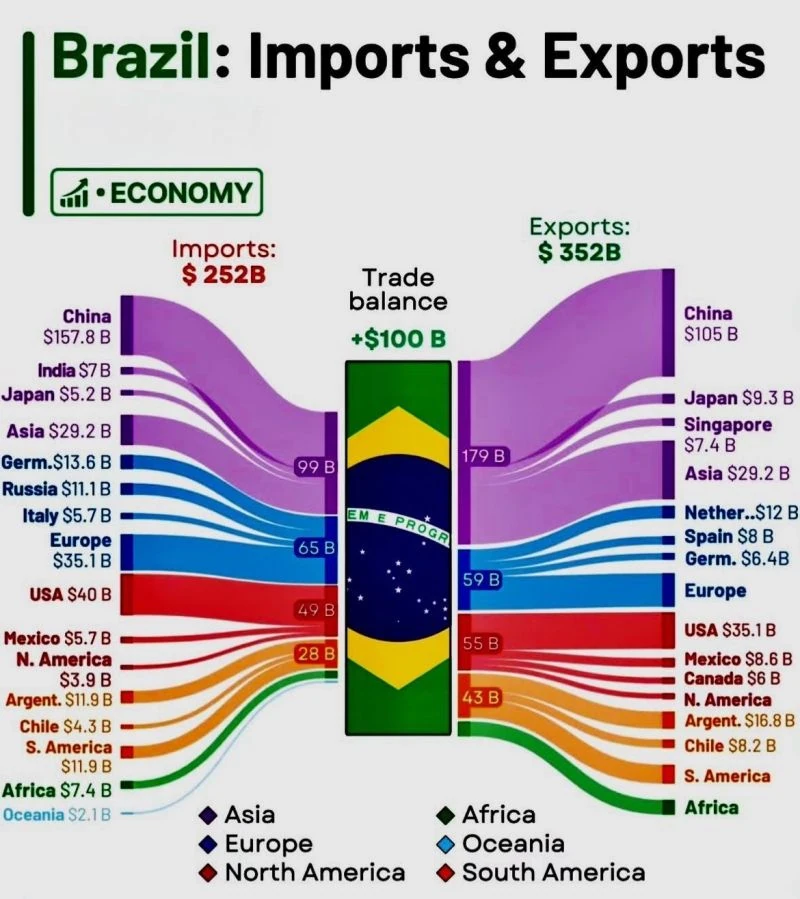
verview of Brazil’s Trade Landscape

Brazil’s international trade network is a critical component of its economic framework, influencing both domestic industries and its role in global markets. Understanding the nation’s primary import and export partners offers insights into the strategic economic alliances and dependencies that shape its trade policies and industrial development.
Key Export Partners and Their Strategic Importance
Brazil’s export portfolio is diversified, with significant shipments directed toward major economies. These relationships are pivotal for Brazil’s industrial sectors, including agriculture, mining, and manufacturing. The export destinations not only reflect demand for Brazil’s commodities but also signal the country’s integration into global value chains, impacting its economic resilience and growth potential.
Major Import Sources and Supply Chain Considerations
On the import side, Brazil relies on a select group of countries for critical inputs ranging from industrial machinery to technology components. These supply lines are essential for sustaining domestic production and technological advancement. The concentration or diversification of import origins affects Brazil’s exposure to external shocks and its ability to maintain supply chain continuity.
Implications for Brazil’s Economic Strategy
The configuration of Brazil’s import and export partnerships informs its broader economic and industrial strategies. By aligning trade relationships with national priorities, Brazil can enhance its competitive advantage, foster innovation, and mitigate risks associated with geopolitical shifts. This trade matrix also influences Brazil’s negotiation leverage in international forums and its capacity to attract foreign investment.
Conclusion
Brazil’s trade partnerships are a strategic asset that underpins its economic development and global integration. A nuanced understanding of these relationships is essential for policymakers and industry leaders aiming to navigate the complexities of international trade, optimize supply chain resilience, and secure long-term economic competitiveness.
Related Analysis
-
Navigating the Complex Landscape of Global Trade: Trends, Challenges, and the WTO’s Role
-
Geopolitical and Industrial Implications of ASML’s EUV Technology and U.S.-China Export Controls
-
German Industry’s Strategic Stockpiling of Rare Earths Amid EU-China Trade Tensions
-
China Condemns US FCC Ban on Device Testing, Highlights Risks to Global Supply Chains
-
Assessing Financial Market Dominance: United States Versus China Amid Rising Trade Tensions
Source: LinkedIn
Can you afford not to enter the Brazilian market? Talk to us, we’ll help you succeed in Brazil.
Talk to us →