


ontextualizing U.S. Challenges in Defense Supply Chain Transparency

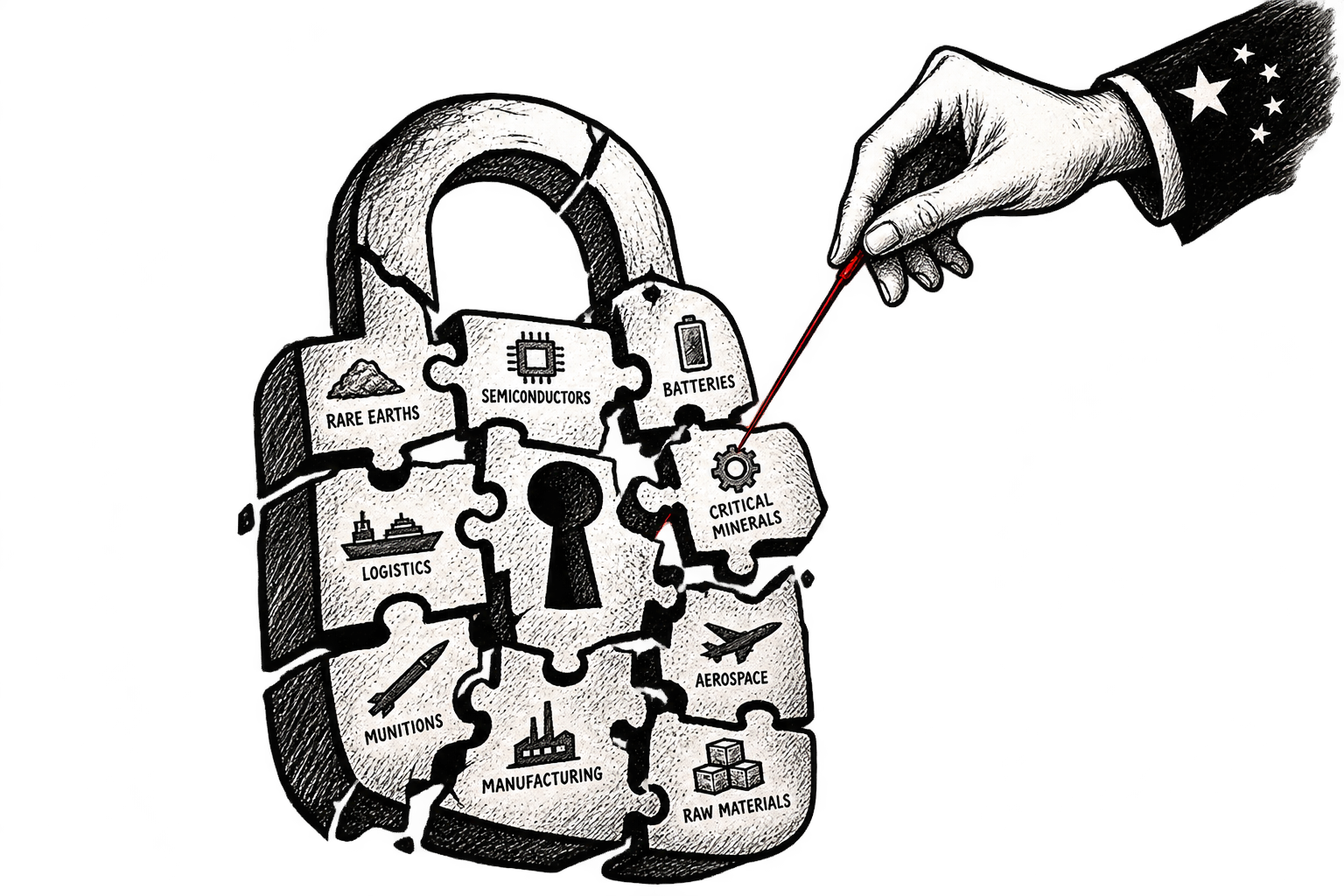
The United States is currently engaged in a critical effort to revitalize its defense industrial base, confronting the reality that it no longer fully controls or comprehends the complex industrial ecosystems underpinning its supply chains. This challenge is exacerbated by China’s strategic use of targeted export controls and licensing requirements on key materials at specific nodes within global supply chains. These measures have allowed China to secure a significant strategic advantage, applying precision-like interventions that contrast sharply with the broader, less effective U.S. responses.
Maintaining operational readiness and surge capacity in defense requires a detailed understanding of the provenance and scalability of critical materials. The Department of Defense (DoD), with its substantial acquisition budget and congressional mandate, has emerged as the primary driver for enhancing supply chain visibility. However, the complexity of modern supply chains demands a nuanced approach that transcends traditional defense frameworks.
Leveraging Established Transparency Frameworks Beyond Defense
Rather than attempting to reinvent supply chain transparency mechanisms from the ground up, the DoD could benefit from integrating the expertise of established organizations with proven track records in supply chain tracking. Entities such as the Responsible Business Alliance, the Initiative for Responsible Mining Assurance, the Textile Exchange, and government-led initiatives like the Kimberley Process have developed practical methodologies to achieve transparency and resilience in complex, real-world supply chains.
While these organizations’ primary objectives may not align perfectly with U.S. national security goals, their operational experience in balancing transparency, stakeholder buy-in, and practical implementation offers valuable insights. Adapting these frameworks could provide a cost-effective and efficient path to enhancing defense supply chain visibility without duplicating efforts.
Contrasting Industrial Incentives and Policy Evolution
China’s industrial policy has evolved from prioritizing the export of critical minerals to capturing downstream manufacturing value, enabling it to control significant segments of the supply chain. This shift has been accompanied by rapid policy adjustments that reinforce its dominant position. Conversely, U.S. industrial incentives historically emphasized lean manufacturing and cost efficiency over resilience, a posture that persisted even as China demonstrated its capacity to disrupt supply chains for geopolitical leverage.
Recent years have seen an acceleration in U.S. government efforts to identify and secure critical supply chains, with legislative measures such as Sections 856, 849, and 833 of the National Defense Authorization Acts (NDAA) establishing requirements and pilot programs for supply chain mapping and contractor compliance. Despite this progress, implementation challenges remain, including data rights, enforcement across foreign suppliers, and defining the scope of due diligence.
Implementation Challenges and the Need for Leadership
Historical efforts like 10 U.S.C. 4872 illustrate the complexities in achieving contractor compliance and supply chain transparency. Despite statutory mandates and regulatory updates, some contractors have sought waivers or delayed implementation, underscoring the necessity for strong leadership within the DoD to enforce requirements and drive behavioral change.
Furthermore, the proliferation of supply chain cells within various DoD offices risks fragmentation and inefficiency. Centralizing industrial base policy under an assistant secretary-level office and maintaining adequate staffing and funding are critical to ensuring coherent strategy and execution. Investments alone are insufficient without complementary transparency and predictable supply-demand dynamics.
Addressing Geopolitical and Operational Realities
China’s dominant position in critical mineral supply chains, coupled with its intrusive export licensing regime, enables it to gather extensive intelligence on global supply networks and strategically influence trade flows. This approach leverages China’s near-monopoly to compel compliance and extract proprietary information from foreign companies, providing both commercial and geopolitical advantages.
In contrast, the United States lacks similar leverage over upstream producers and must therefore cultivate a supply chain tracking system that is accessible, flexible, and attractive to a diverse range of stakeholders, including small and medium enterprises and foreign suppliers. This necessitates a system that balances national security priorities with the practicalities of industrial participation and geographic diversity.
Designing a Flexible and Practical Supply Chain Tracking Framework
The DoD should consider a supply chain transparency framework that emphasizes simplicity and agility. Core objectives should focus on accurately identifying entities handling critical materials, ownership structures, and compliance with human rights and environmental standards without overextending into broader environmental, social, and governance (ESG) mandates.
Incorporating a variety of verification tools—from shipment fingerprinting and real-time software monitoring to third-party audits—would allow for adaptable implementation tailored to different industrial contexts. Employing reputable external auditors could also alleviate concerns among foreign suppliers reluctant to share sensitive data directly with U.S. government bodies, thereby enhancing participation and data reliability.
Strategic Implications and Path Forward
The United States retains significant economic influence but risks perpetuating inefficient supply chain oversight if it continues with legacy approaches that attempt to fragment global networks into narrowly defined defense-specific chains. Such strategies may inadvertently reduce supply diversity and increase costs as commercial producers gravitate toward more user-friendly systems.
By contrast, embracing a collaborative approach that draws on non-defense expertise and prioritizes flexibility could yield a more resilient, competitive, and cost-effective supply chain ecosystem. This strategy requires humility and openness within the DoD to learn from external actors and to coordinate efforts across government and industry.
Ultimately, enhancing supply chain transparency is not solely a matter of regulatory mandates or investment but hinges on cultivating an integrated framework that aligns strategic defense needs with practical industrial realities, thereby reinforcing U.S. technological leadership and national security in an increasingly complex geopolitical environment.
Related Analysis
-
China’s Economic Slowdown and the Strategic Opportunity for U.S. Industrial Resilience
-
China’s Evolving Role in Global Electronics: From Manufacturing Hub to Innovation Headquarters
-
China’s Coal Industry: A Strategic Energy Alternative Amid Global Oil Supply Disruptions
-
Assessing the Limits of Export Controls on China’s Expanding Industrial Base
-
Assessing Financial Market Dominance: United States Versus China Amid Rising Trade Tensions
Source:
War on the Rocks
Can you afford not to enter the US market? Talk to us, we’ll help you succeed in the United States.
Talk to us →