


eopolitical Context and Supply Chain Fragility

In an era marked by escalating geopolitical disruptions—from the oil crisis and Brexit to the US-China trade tensions and blockades of vital maritime chokepoints—Europe faces heightened vulnerability due to its reliance on complex global supply chains. Critical raw materials essential to European industry predominantly transit through a handful of strategic sea routes, each susceptible to disruption, underscoring the urgency for alternative sourcing strategies.
The Circular Economy as a Strategic Imperative
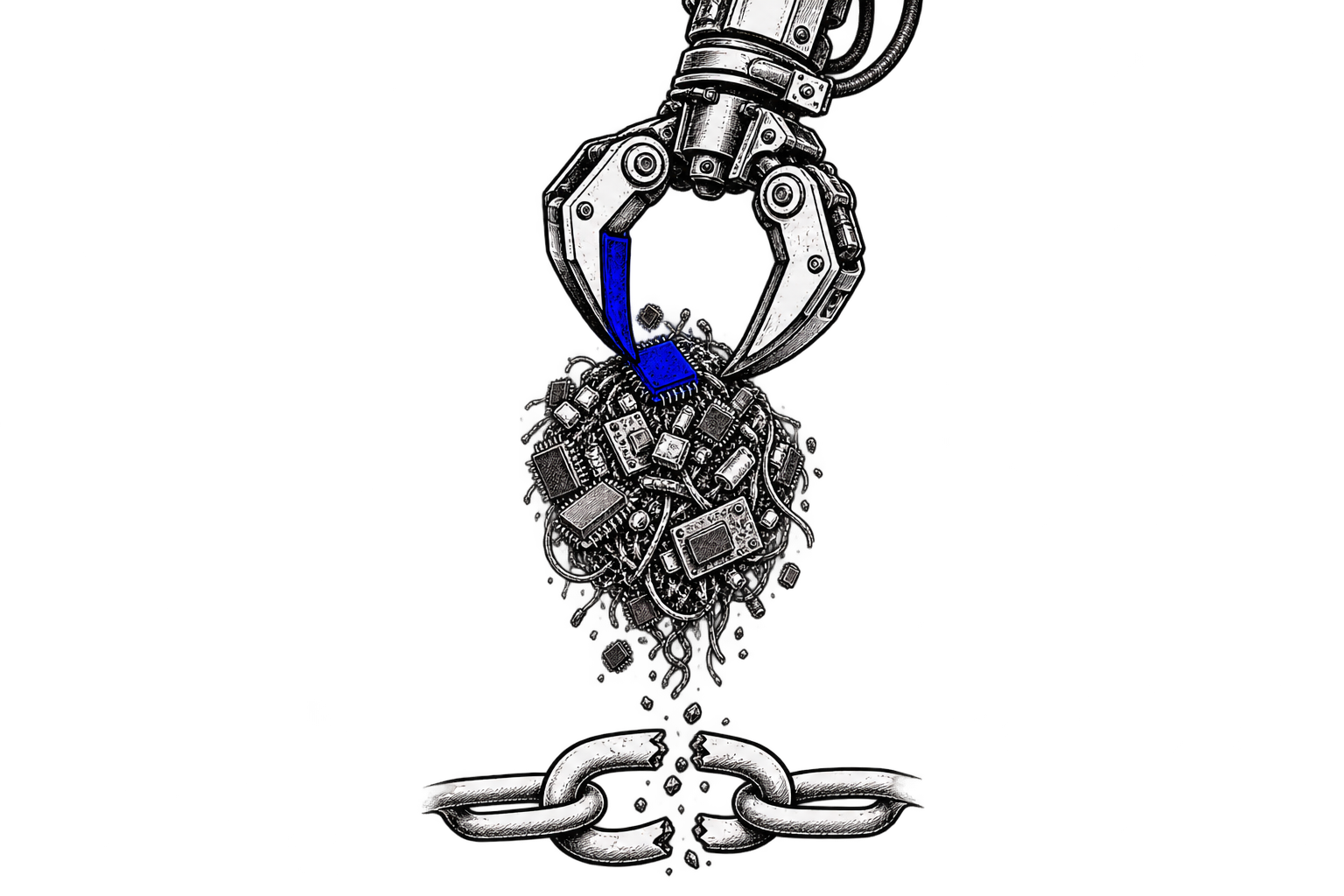
Europe’s response to these challenges increasingly centers on the circular economy, specifically through urban mining—the recovery of valuable raw materials from electronic waste within urban environments. This approach offers a strategic advantage by reducing dependence on distant mining operations and vulnerable shipping lanes. Notably, discarded electronics contain concentrations of precious metals such as gold, silver, and rare earth elements far exceeding those found in natural ore deposits, presenting a compelling case for domestic resource recovery.
Technological Innovations Transforming Resource Recovery
Historically, the extraction of metals from electronic waste has lagged behind traditional mining in cost-effectiveness due to the labor-intensive nature of disassembly and the limitations of conventional recycling methods, which often result in downcycling rather than true material recovery. Recent advances in artificial intelligence and robotics are reversing this trend. Machine vision and adaptive robotic manipulators now enable efficient, automated disassembly and sorting of complex electronic components, significantly lowering processing costs and increasing recovery yields.
Europe’s Leadership and Industry Landscape
Despite a current recovery rate of less than one percent for rare earth elements from sources such as electric motors and permanent magnets, Europe is positioning itself as a global frontrunner in automated urban mining technologies. Innovative startups and scale-ups across the continent are developing sophisticated robotic systems for dismantling a range of electronic waste, including flat screens, industrial electronics, solar panels, and electric vehicle battery systems. These companies integrate AI-driven visual inspection systems to optimize material sorting and facility operations, enabling scalable and efficient resource recovery.
Challenges and Opportunities Ahead
While Europe leads in innovation and investment—attracting over 55 percent of global funding for circular economy startups in 2024—the sector has yet to achieve industrial-scale operations comparable to traditional mining industries. This juncture resembles the solar industry’s trajectory fifteen years ago, where early leadership did not translate into sustained market dominance due to insufficient scaling and investment. To avoid repeating this pattern, Europe must leverage its technological edge with robust industrial policy support and capital deployment to establish a competitive manufacturing base for automated recycling facilities.
Strategic Implications for Technological and Economic Competitiveness
The development and deployment of AI-enabled urban mining infrastructure represent a critical opportunity for Europe to enhance supply chain resilience, secure access to critical materials, and assert technological leadership in a sector poised for significant growth. By transforming electronic waste into a reliable source of high-value raw materials, Europe can reduce strategic dependencies on China and the United States, bolster its industrial sovereignty, and position itself as a key exporter of advanced recycling technologies in the coming decade.
Related Analysis
-
Intersecting Pressures on U.S. Financial Stability and AI Semiconductor Supply Chains
-
China’s Strategic Focus on AI as Foundational Infrastructure Rather Than Consumer Chatbots
-
Assessing the Limits of Export Controls on China’s Expanding Industrial Base
-
China’s Evolving Role in Global Electronics: From Manufacturing Hub to Innovation Headquarters
-
China’s Dominance in Rare Earths: Strategic Implications for Global Technology Leadership
Source:
FOCUS
Can you afford not to expand abroad Talk to us, we’ll help you grow your business internationally.
Talk to us →