Reassessing U.S. AI Strategy Amid China's Rapid Advances and Market Pressures

Reassessing U.S. AI Strategy Amid China’s Rapid Advances and Market Pressures

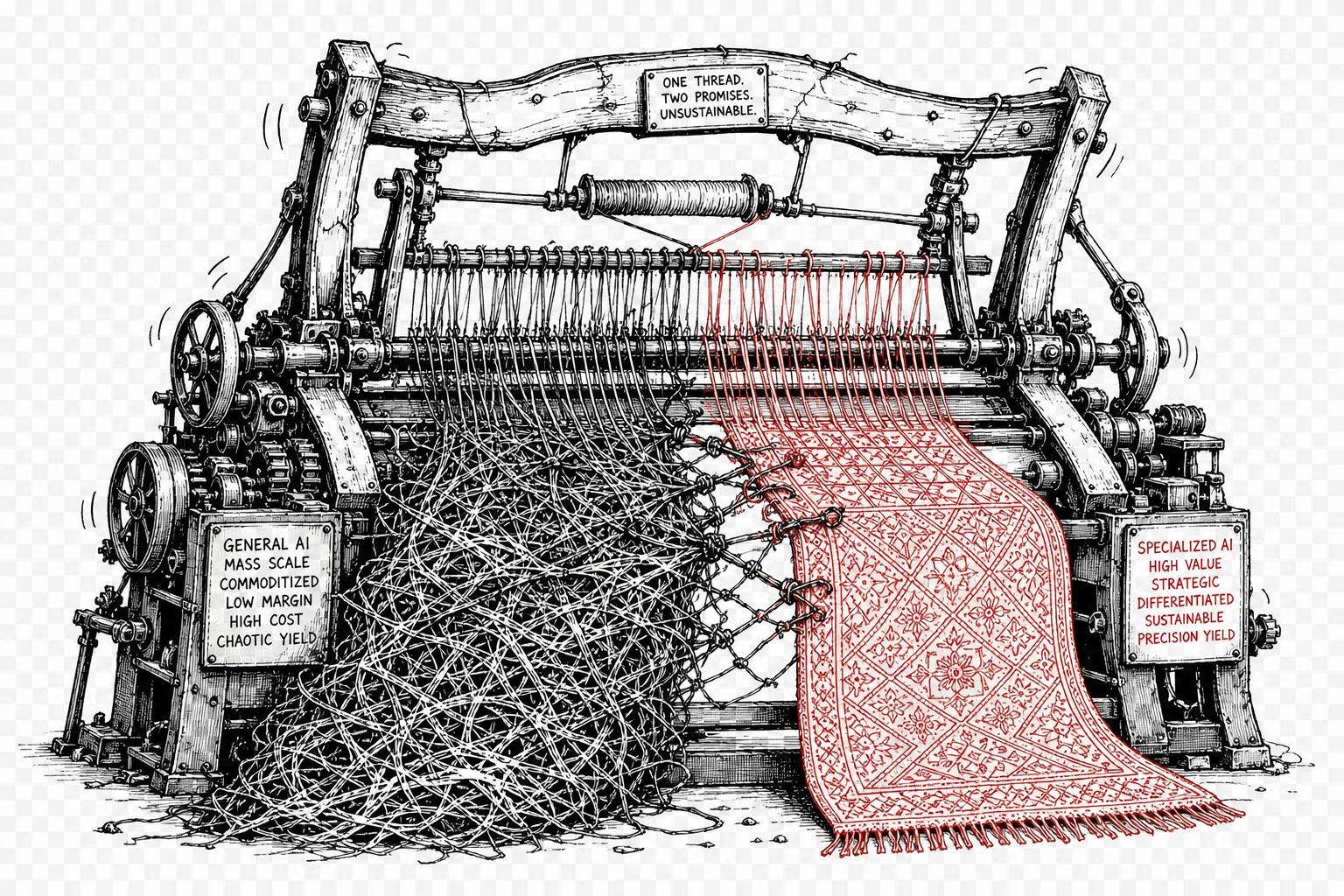
As China narrows the technological gap in artificial intelligence, the U.S. faces critical challenges in its AI industry driven by unsustainable economic models and strategic misalignment. This analysis examines the structural inefficiencies of current AI paradigms and argues for a recalibration toward innovation in specialized AI applications with long-term strategic value.


China’s Strategic Focus on AI as Foundational Infrastructure Rather Than Consumer Chatbots

China’s Strategic Focus on AI as Foundational Infrastructure Rather Than Consumer Chatbots

China is advancing artificial intelligence by embedding it as a core component of infrastructure across industries and urban management, diverging from the Western emphasis on consumer-facing chatbots. This approach integrates AI into robotics, logistics, and smart city systems, aiming to enhance operational efficiency and resilience.

Rethinking AI Policy: The Risks of the Nuclear Weapons Analogy in Advanced AI Governance

Rethinking AI Policy: The Risks of the Nuclear Weapons Analogy in Advanced AI Governance

The prevailing analogy equating artificial intelligence development with nuclear weapons has shaped U.S. AI policy debates, but critical differences in command structures, safety protocols, and strategic framing highlight the limitations of this comparison. A nuanced approach is necessary to address AI’s unique risks and governance challenges.

Xi Jinping Advocates AI-Driven Industrial Collaboration and Middle East Peace Role for BRICS

Xi Jinping Advocates AI-Driven Industrial Collaboration and Middle East Peace Role for BRICS

At the BRICS summit in New Delhi, Chinese President Xi Jinping outlined a strategic vision for enhanced cooperation on artificial intelligence and industrial supply chains among emerging economies, while emphasizing the bloc’s potential role in mediating Middle East peace and opposing geopolitical confrontations.

Assessing the Shifting Dynamics of Global Innovation: U.S. and China in Strategic Competition

The United States has long been the undisputed leader in global innovation, but China’s rapid advancements and systemic approach to technology development are narrowing the gap, raising critical questions about future industrial and geopolitical dominance.

China’s Wave-Powered Unmanned Surface Vehicles Redefine Undersea Warfare and Maritime Surveillance

China is advancing wave-powered unmanned surface vehicles equipped with passive sonar and artificial intelligence, potentially transforming undersea detection and maritime domain awareness in contested regions like the South China Sea.

Brazil’s Strategic Shift: Why Data Centers Are Becoming Energy Producers

Brazil’s new regulatory mandate requiring data centers to operate their own power plants marks a significant evolution in infrastructure strategy, driven by the energy demands of AI workloads and grid vulnerabilities. This model offers a blueprint for global markets grappling with the intersection of digital growth and energy resilience.

China Surpasses U.S. in R&D Spending: Implications for Global Technological Leadership and Economic Power

Recent OECD data reveals that China has overtaken the United States in research and development expenditures when adjusted for purchasing power parity, signaling a significant shift in the global innovation landscape. This development underscores China’s strategic coordination in science and technology investment and suggests a move toward a multipolar technological order.