


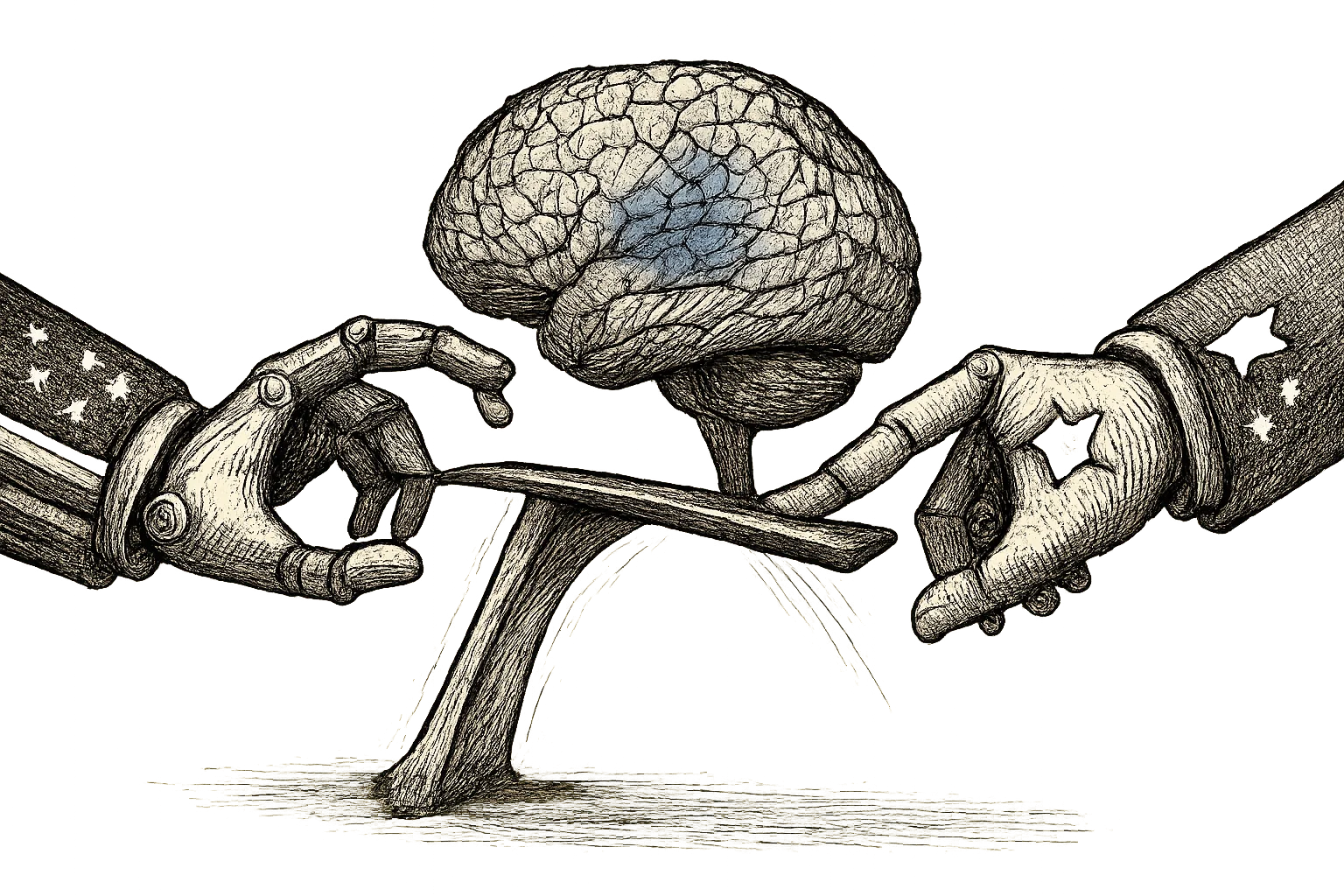
Balancing Competition and Collaboration in US-China AI Relations
Jensen Huang, founder and CEO of Nvidia, the world’s most valuable technology company, recently underscored the critical importance of artificial intelligence as a transformative technology with profound global implications. Speaking on the ongoing US-China AI race, Huang highlighted the necessity for both nations to improve communication and foster closer cooperation despite their competitive dynamics.
Huang articulated a nuanced perspective that recognizes the reality of strategic rivalry between the United States and China, while simultaneously advocating for collaborative efforts to address the inherent risks posed by AI development. “We should recognise that we’re competitors, and competitors are still able to collaborate,” Huang stated, emphasizing that technological advancement and risk management are not mutually exclusive objectives.
Strategic Significance of AI and the Imperative for Risk Mitigation
Artificial intelligence is increasingly central to national security, economic competitiveness, and technological leadership. Huang described AI as an “important and consequential technology” with the potential to generate significant benefits but also to cause harm if not managed responsibly. This dual potential reinforces the need for frameworks that enable innovation while safeguarding against unintended consequences.
Huang’s comments come amid heightened geopolitical tensions and divergent policy approaches. Notably, recent statements by US political leaders have rejected international regulatory oversight of American technology and dismissed proposals for joint US-China AI safety frameworks. In this context, Huang’s call for dialogue and cooperation stands out as a strategic appeal for pragmatic engagement to navigate the complex challenges posed by AI.
Implications for Technological Leadership and Geopolitical Dynamics
The intersection of competition and collaboration in AI development between the US and China has significant implications for the global technology landscape. Nvidia’s position at the forefront of AI hardware and software innovation places it at the center of this strategic contest. Huang’s advocacy for cooperative risk management highlights an understanding that unilateral approaches may be insufficient to address AI’s multifaceted challenges.
Enhanced US-China communication and joint efforts to mitigate AI risks could contribute to stabilizing an increasingly fraught technological rivalry, potentially enabling both countries to harness AI’s benefits while minimizing threats to security and societal well-being. This balance is critical as AI continues to shape economic and military capabilities, influencing long-term power dynamics.
Conclusion
Jensen Huang’s remarks provide a strategic lens on the US-China AI competition, emphasizing the importance of dialogue and collaboration alongside competition. As artificial intelligence becomes a defining technology of the 21st century, managing its risks through cooperative frameworks may represent a pragmatic pathway to sustaining innovation, ensuring security, and maintaining global technological leadership.
Related Analysis
Source:
South China Morning Post
Can you afford not to enter the Chinese market? Talk to us, we’ll help you succeed in China.
Talk to us →