


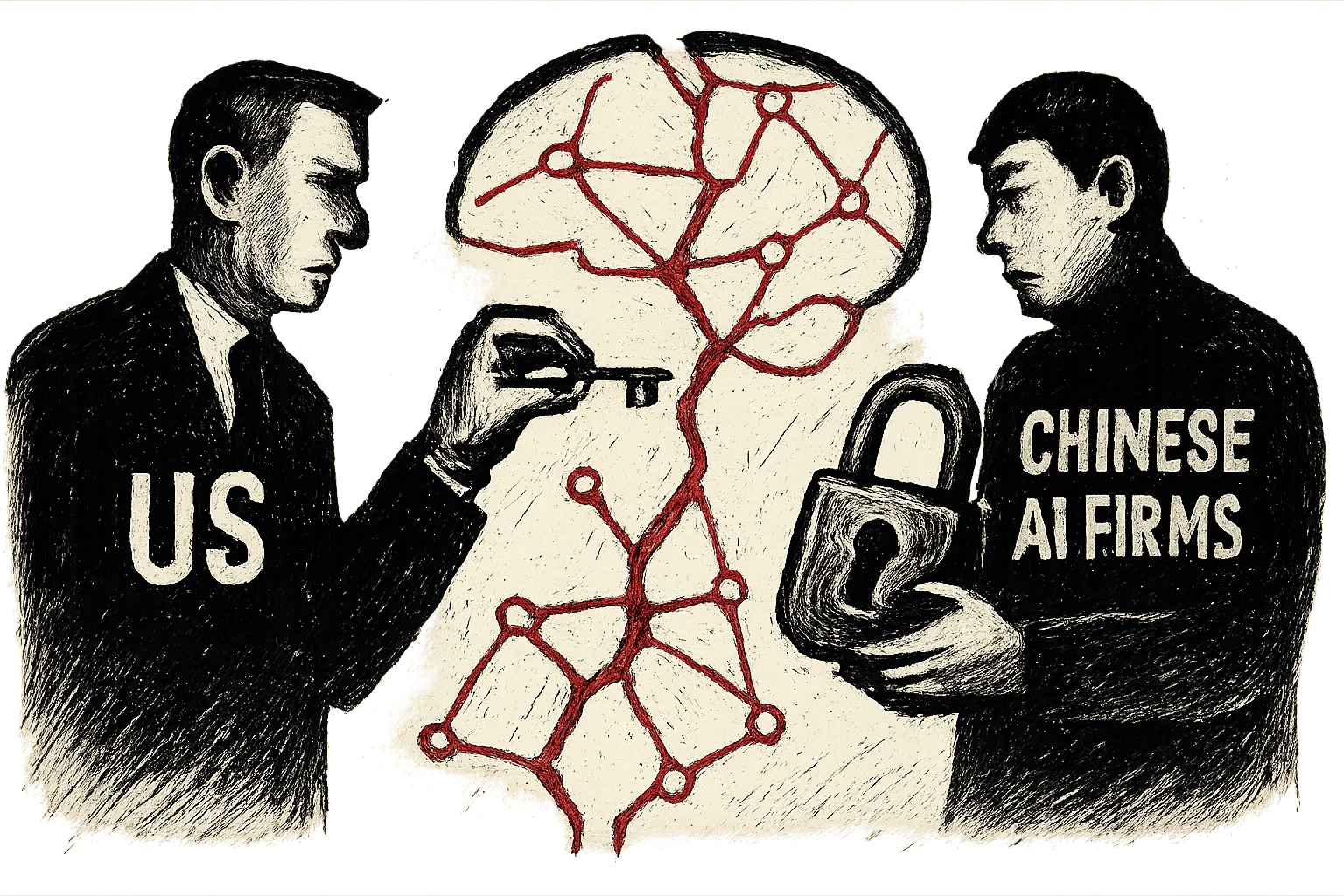
Chinese AI Firms’ Reluctance Reflects Heightened Sanctions Sensitivity
During a recent visit to Beijing, a delegation from the US-China Economic and Security Review Commission (USCC) encountered resistance from prominent Chinese artificial intelligence (AI) companies, which declined to engage with the US officials. This reluctance was attributed to concerns that interactions with the US delegation could lead to the firms being placed on the US entities list, thereby exposing them to restrictive sanctions.
Randy Schriver, chairman of the USCC, relayed that Chinese firms described the commission as “a really scary commission” due to its hawkish stance on China, contributing to their apprehension. Despite assurances from the delegation that cooperation might facilitate removal from sanctions lists, the firms remained hesitant to meet. This episode illustrates the deep mistrust and strategic caution characterizing US-China technology relations amid escalating geopolitical competition.
Implications for US-China AI Dialogue and Strategic Competition
The USCC delegation characterized its visit as a fact-finding mission aimed at informing its comprehensive annual report to Congress on China’s military, economic, and technological trajectory. The lack of direct engagement with leading AI firms limits the commission’s ability to obtain nuanced insights into China’s AI ecosystem, which is critical for shaping US policy responses.
Notwithstanding these challenges, the commission emphasized the importance of the forthcoming bilateral dialogue on AI governance between Washington and Beijing. This dialogue represents a rare channel for managing risks associated with emerging technologies and for exploring frameworks that could mitigate strategic competition in AI development.
Strategic Context: AI as a Nexus of Economic and Security Rivalry
The incident underscores the broader context of AI as a focal point in the US-China strategic rivalry, where technological leadership is closely tied to economic competitiveness and national security. US sanctions and export controls targeting Chinese technology companies aim to curtail China’s advancement in critical AI capabilities, while Beijing seeks to protect its domestic champions from external pressures.
These developments highlight the delicate balance between engagement and containment in US policy. The reluctance of Chinese firms to engage with US officials reflects Beijing’s heightened sensitivity to perceived US efforts to constrain its technological ascent, complicating efforts to establish cooperative mechanisms in AI governance.
Conclusion: Navigating a Complex Technological and Geopolitical Landscape
The avoidance of direct dialogue by Chinese AI firms amid sanctions fears signals a growing challenge for US policymakers seeking to understand and influence China’s AI sector. As the US and China prepare for dedicated talks on AI governance, the success of these discussions will depend on building trust and addressing the underlying security and economic concerns that currently hinder open engagement.
For the United States, maintaining technological leadership in AI requires not only advancing domestic innovation but also developing strategic approaches to international cooperation and competition. The evolving dynamics between US congressional bodies and Chinese technology firms will remain a critical factor shaping the future of AI governance and the broader US-China relationship.
Source:
South China Morning Post
Can you afford not to enter the Chinese market? Talk to us, we’ll help you succeed in China.
Talk to us →