


Introduction to China’s Space-Based Rail Control Initiative
China operates the world’s largest high-speed rail network, a critical component of its transportation infrastructure and industrial prowess. Recognizing the vulnerabilities inherent in terrestrial control systems reliant on extensive cabling, radio masts, and signal lamps, Chinese engineers are pioneering a novel approach: controlling high-speed trains through satellites in low Earth orbit (LEO). This initiative, led by the state-owned China Railway Signal & Communication Corporation (CRSC), seeks to relocate the network’s command and control functions to space, thereby enhancing resilience against natural disasters and physical infrastructure failures.
Technical Architecture and Operational Concept
The proposed architecture involves a constellation of LEO satellites acting as relay nodes between trains and ground control centers. Each train continuously transmits its position and speed data to the satellite network, which forwards this information to terrestrial operations centers for processing. Commands such as movement authorizations are then sent back through the satellite relay to the trains. This design leverages the advantage that satellite communication operates above weather phenomena, insulating the control system from terrestrial disruptions such as floods, earthquakes, or lightning strikes—risks that have previously resulted in fatal accidents, notably the 2011 Wenzhou collision.
Cybersecurity Risks in Space-Based Rail Control
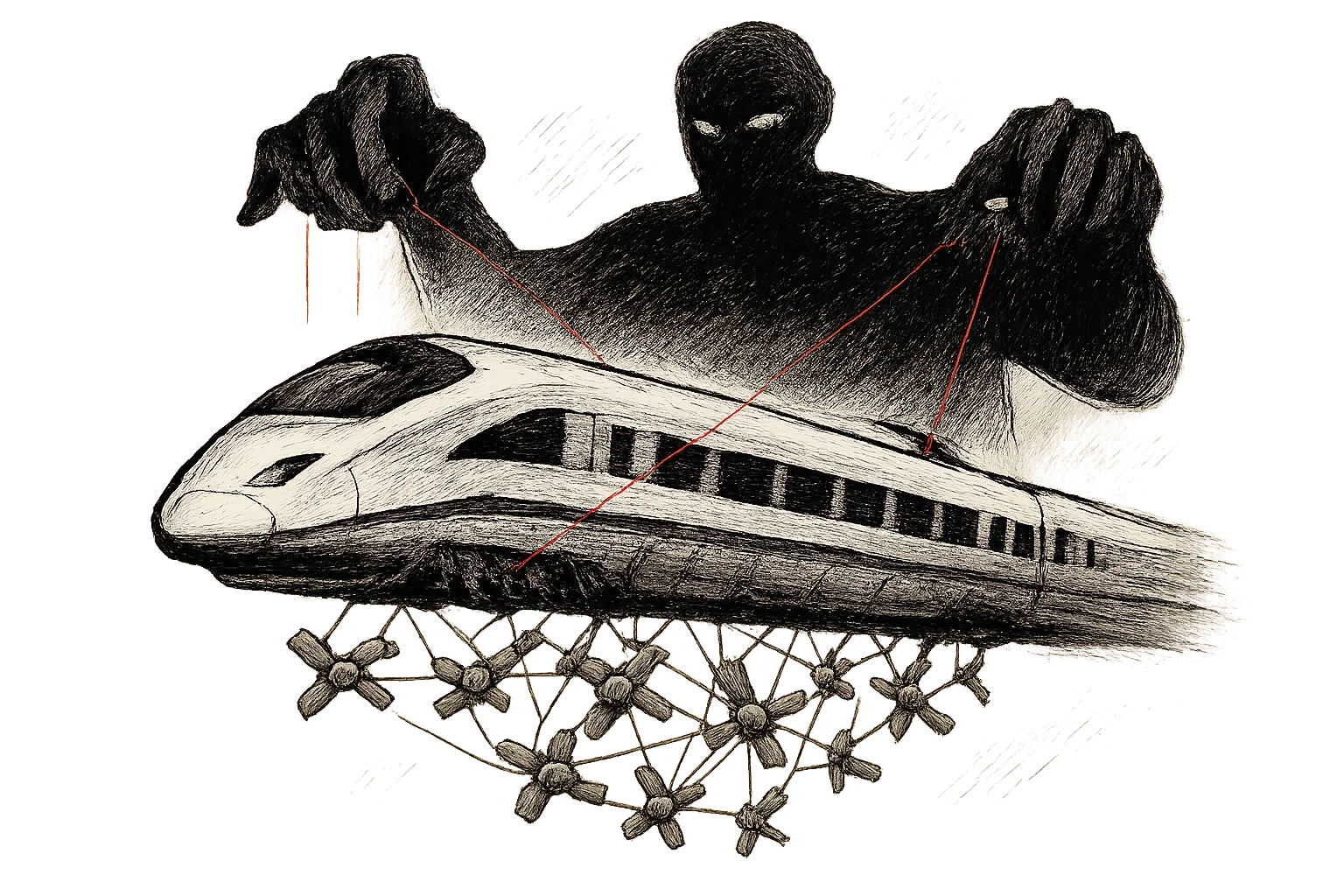
While the space-based control system offers operational benefits, it introduces a complex cybersecurity landscape. The CRSC research team highlights potential threats including signal spoofing, jamming, and buffer overflow attacks. Spoofing could allow malicious actors to inject false commands or manipulate train position data, potentially causing collisions or operational chaos. The limited computational capacity of satellite onboard systems constrains the deployment of sophisticated security software, complicating patching and real-time threat mitigation in orbit.
Moreover, ground stations remain vulnerable to cyber intrusions or insider threats, further expanding the attack surface. The risk of an attacker seizing control of a satellite and issuing harmful commands to multiple trains underscores the systemic vulnerabilities inherent in integrating critical infrastructure with space assets.
Proposed Security Measures and Redundancy Strategies
To address these challenges, the CRSC team proposes a multi-layered defense framework. End-to-end encryption at military-grade standards would secure all communications between trains, satellites, and ground stations. Satellites would incorporate firewalls and intrusion detection systems to filter out commands lacking proper cryptographic authentication.
Additionally, the system design emphasizes sensor fusion and redundancy. Trains would cross-verify satellite data with onboard inertial navigation systems, track circuit information, and passive balises. If satellite signals appear compromised, trains would automatically reduce speed and adopt a conservative operational mode to maintain safety. A trusted computing approach would ensure that control software boots in a verified, unaltered state, mitigating risks of software tampering.
Geopolitical and Strategic Dimensions of Exporting Space-Based Rail Control
China’s deployment of high-speed rail technology has expanded beyond its borders, with projects such as the Jakarta–Bandung line in Indonesia exemplifying its export ambitions. Integrating space-based train control into these international projects could offer operational advantages in regions with challenging terrain or infrastructure limitations.
However, coupling foreign critical infrastructure to Chinese-operated satellite systems carries significant geopolitical implications. Host countries cede a degree of control over vital transportation networks, raising concerns analogous to those seen in debates over 5G networks and cloud service providers linked to China. This dynamic introduces strategic leverage for China in its international relations and underscores the intersection of technological innovation with geopolitical competition.
Conclusion
China’s initiative to govern its high-speed rail network via LEO satellites represents a pioneering convergence of space technology and transportation infrastructure. While promising enhanced resilience and operational efficiency, the approach entails substantial cybersecurity challenges that require robust defense mechanisms. Furthermore, as China extends this technology internationally, strategic considerations surrounding sovereignty, control, and influence over critical infrastructure will shape the broader geopolitical landscape. The development highlights the evolving nature of technological competition where space-based systems become integral to national and international infrastructure frameworks.
Source:
Telepolis
Can you afford not to enter the Chinese market? Talk to us, we’ll help you succeed in China.
Talk to us →