


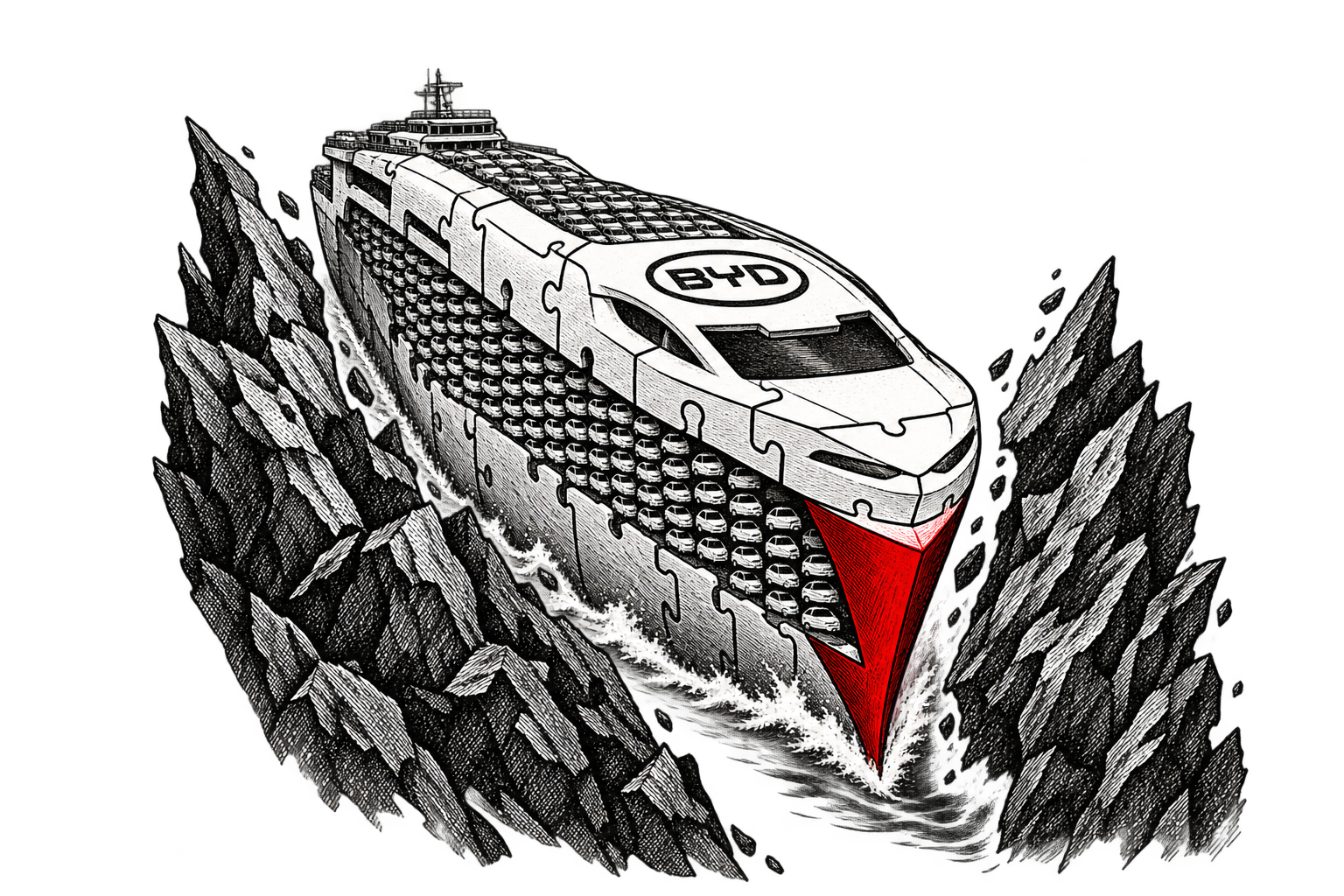
BYD’s Fleet Expansion as a Response to Export and Shipping Challenges
BYD Auto, the world’s leading electric vehicle manufacturer in 2023, is undertaking a substantial expansion of its car-carrying cargo ship fleet to address bottlenecks in exporting its rapidly produced vehicles. By 2029, BYD plans to increase its fleet from eight to eighteen vessels, each capable of transporting approximately 9,200 cars. These ships are being constructed by China Merchants Industry, reflecting a strategic vertical integration into logistics to reduce reliance on external shipping providers.
Owning its fleet enables BYD to reduce shipping costs by an estimated 40% compared to chartering vessels, a critical advantage given the recent surge in freight rates driven by geopolitical tensions and supply chain disruptions. This move facilitates greater control over shipping routes and scheduling, enhancing BYD’s capacity to expand its international market presence amid intensifying competition, particularly with Tesla and established U.S. automakers.
Geopolitical and Market Forces Driving Shipping Costs
Global conflicts, notably in the Red Sea and around the Strait of Hormuz, have disrupted traditional shipping lanes, compelling vessels to take longer routes such as around the Cape of Good Hope. This rerouting has increased transit times by up to two weeks and raised operational costs substantially. The daily charter rate for a car carrier with a capacity of approximately 6,500 vehicles has nearly doubled since early 2023, reflecting tightened capacity and heightened risk premiums.
Chinese shipping companies currently constitute a small fraction of global car carrier capacity, compelling many Chinese automakers to rely on international shipping firms. BYD’s investment in its own fleet thus represents a strategic hedge against volatile charter markets and regional instability, ensuring more predictable logistics for its growing export volumes.
Export Growth and Domestic Market Dynamics
BYD’s export ambitions are ambitious, targeting over 2.5 million vehicles sold overseas in the coming year, up from a forecast of 1.9 to 2 million this year. This export focus is partly driven by a domestic market slowdown, where sales of electric vehicles and plug-in hybrids have declined following the reduction of government tax incentives. BYD’s domestic sales have contracted by a third in the first eight months of the year, prompting a strategic pivot to international markets to absorb production capacity and sustain growth.
Industry analysts note that Chinese automakers are increasingly relying on exports to compensate for cooling domestic demand, with BYD’s control over its shipping network providing a competitive edge. In contrast, competitors such as Tesla continue to depend on third-party carriers, exposing them to higher and more volatile shipping costs.
Strategic Implications of Vertical Integration in EV Logistics
BYD’s ownership of a specialized fleet dedicated exclusively to electric and plug-in hybrid vehicles underscores a broader strategic trend of integrating logistics into manufacturing operations. This approach allows BYD to navigate geopolitical uncertainties, manage cost pressures, and maintain supply chain resilience. The fleet’s use of liquefied natural gas aligns with emerging environmental regulations at ports, signaling an emphasis on sustainable operations in tandem with scale expansion.
Other Chinese automakers are beginning to follow suit, with Geely and Chery initiating their own ventures into car carrier operations. However, BYD’s early and substantial commitment to fleet ownership positions it as a frontrunner in leveraging logistics as a strategic asset in the global EV market.
Conclusion
BYD’s expansion into owning and operating a dedicated fleet of EV carriers represents a calculated strategic response to the complex interplay of rising freight costs, geopolitical disruptions, and shifting demand patterns in the automotive sector. This move enhances BYD’s ability to control critical supply chain elements, reduce costs, and accelerate international market penetration, thereby consolidating its position as a dominant player in the global electric vehicle industry.
Related Analysis
-
China’s BYD Explores Lithium Battery Manufacturing Expansion in Argentina Amid Strategic Investment Drive
-
China’s Coal Industry: A Strategic Energy Alternative Amid Global Oil Supply Disruptions
Source:
Rest of World
Can you afford not to enter the Chinese market? Talk to us, we’ll help you succeed in China.
Talk to us →