


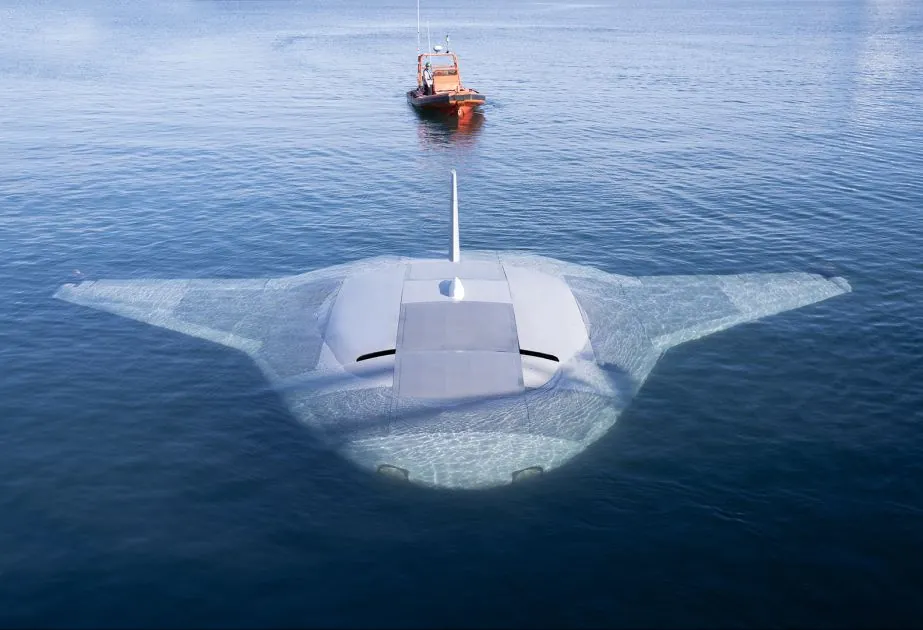
Technological Breakthrough in Dual-Domain Unmanned Vehicles
Chinese researchers have achieved a pioneering technological milestone by creating the world’s first drone designed for deployment from a submarine that can seamlessly transition between aerial flight and underwater navigation during a single mission. This amphibious unmanned aerial and underwater vehicle (UAUV) marks a significant leap in dual-domain operational capabilities, blending air and underwater environments to enhance mission versatility and survivability.
Innovative Design Enabling Multi-Environment Operations
According to reports from the South China Morning Post, the drone features advanced foldable wings that facilitate smooth transitions between air and water domains. This capability allows the vehicle to be launched from a submerged platform, conduct reconnaissance or surveillance in the air, submerge to perform underwater tasks, and then re-emerge or return to its submarine base. The multi-environment adaptability substantially increases the drone’s stealth and operational flexibility, complicating detection and tracking by adversaries.
Strategic and Military Implications
The introduction of this dual-domain drone enhances China’s unmanned systems portfolio, particularly in contested maritime regions such as the South China Sea and the Taiwan Strait. Potential military applications include integrated intelligence, surveillance, and reconnaissance (ISR) that combines aerial imagery with underwater acoustic and visual data, covert operations launched from submarines far from Chinese shores, and extended support for anti-submarine and surface warfare operations. This technology effectively blurs traditional operational boundaries across air, surface, and underwater domains, presenting new challenges for regional naval defense planning.
Dual-Use Potential in Civilian Sectors
Beyond military uses, the amphibious drone offers significant applications in civilian contexts. These include environmental monitoring and oceanographic research, inspection and maintenance of underwater infrastructure such as pipelines and communication cables, search and rescue missions in complex coastal and island environments, and exploration of marine resources. These dual-use capabilities align with China’s broader strategic emphasis on technologies that serve both economic development and national security objectives.
Context within China’s Autonomous Systems Expansion
This latest innovation complements China’s aggressive expansion of autonomous systems across air, sea, and land domains. It integrates with other recent advancements, including wave-powered surveillance drones and large underwater gliders, to establish a more comprehensive maritime network of unmanned assets. For nations along critical trade routes and in geopolitically sensitive regions such as the Caspian Sea, Central Asia, and Latin America, monitoring these developments is crucial for assessing supply chain security, protecting critical infrastructure, and managing investment risks in energy and maritime sectors.
Implications for Industry and Strategic Risk Management
From an industry perspective, breakthroughs like this accelerate the global competition in dual-use technology development. Stakeholders in maritime security, offshore energy, port infrastructure, and advanced sensor technologies should closely track these trends. For companies operating within or near Chinese supply chains or in geopolitically sensitive areas, this underscores the importance of enhanced risk assessment frameworks that account for emerging unmanned systems impacting maritime domain awareness and operational security.
In conclusion, China’s submarine-launched amphibious drone represents a critical advancement in multi-domain unmanned systems. As these technologies mature and proliferate, they are poised to reshape maritime tactics, security strategies, and commercial operations in strategically vital sea regions worldwide. Early recognition and strategic adaptation will be essential for governments and enterprises navigating this rapidly evolving security landscape.
Can you afford not to expand abroad Talk to us, we’ll help you grow your business internationally.
Talk to us →