



Rapid Expansion of Robot Density in Global Manufacturing
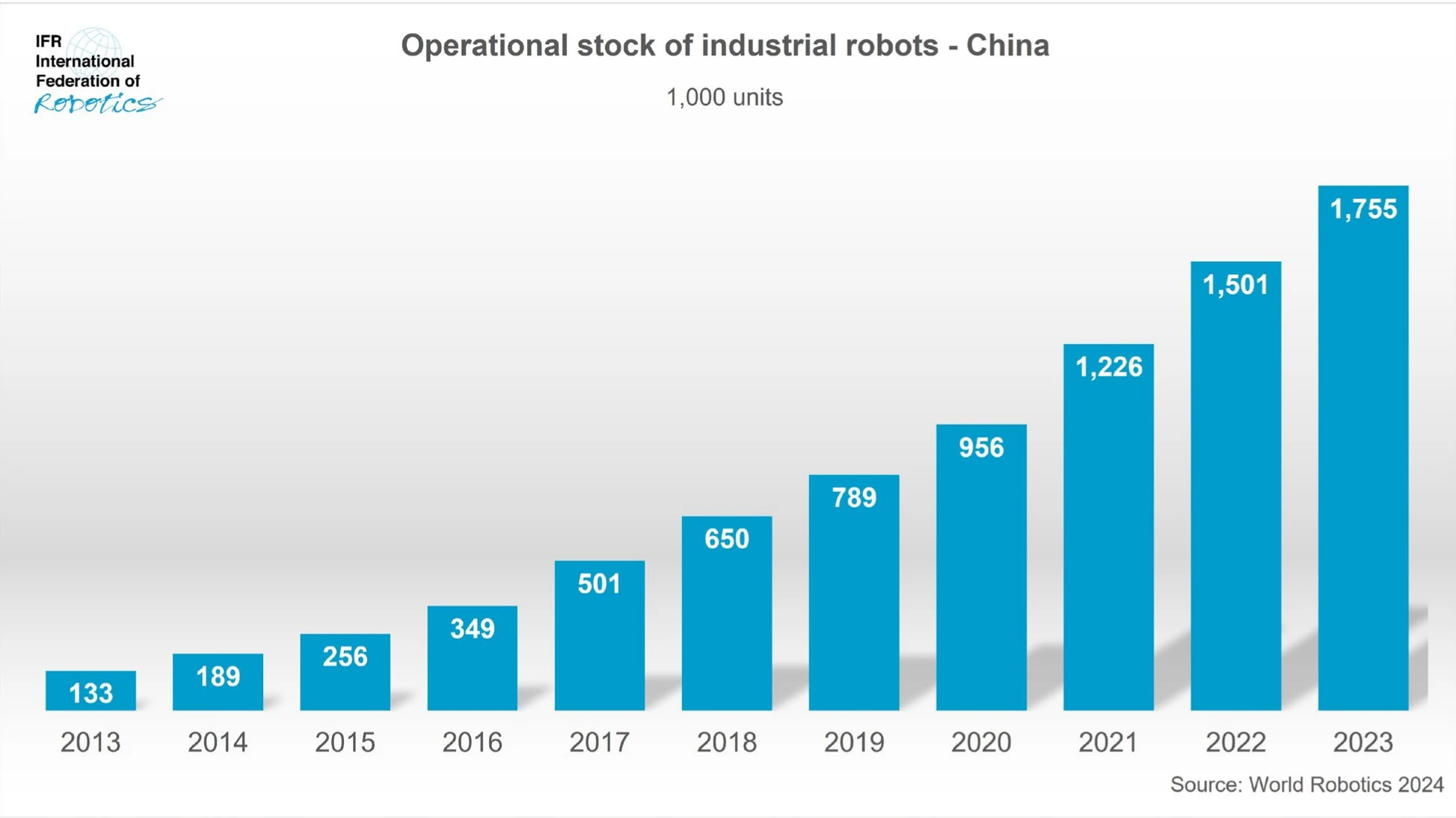
Over the past seven years, the global density of industrial robots in manufacturing facilities has doubled, signaling a significant transformation in production processes worldwide. This surge in automation capacity is not uniformly distributed, with China emerging as a particularly notable case. The country has achieved a remarkable increase in robot deployment, overtaking nearly all advanced economies in this metric.
China Surpasses Established Industrial Powers
China’s manufacturing sector now operates with approximately 470 robots per 10,000 workers, exceeding Taiwan’s 294 robots per 10,000 workers by 60%, and surpassing traditional manufacturing leaders such as Germany, Japan, and the United States. This shift reflects not only China’s closing technological gap but also its attainment of leadership in several future-oriented industrial domains.
Scale and Technological Integration as Strategic Advantages
What distinguishes China’s progress is the scale at which it has integrated automation technologies. Although South Korea and Singapore maintain higher robot densities, their manufacturing sectors are comparatively small. China’s ability to deploy advanced robotics across a manufacturing base that serves a population twice the size of the combined United States and European Union is unprecedented. This scale, combined with ongoing technological improvements, enhances China’s competitive positioning globally.
Implications for Western Industrial Strategy
The assumption prevalent in Western industrial policy circles—that technological superiority and automation would counterbalance China’s manufacturing advantages—has been challenged by these developments. China’s dual approach of embracing cutting-edge automation while leveraging massive production scale has redefined competitive dynamics. Consequently, the prospect of reshoring manufacturing to Western countries purely on the basis of technological edge appears increasingly unrealistic, except in specialized sectors.
Policy Responses and Strategic Choices
In response, Western governments have shifted toward protectionist measures such as tariffs and debates over industrial overcapacity, aiming to artificially level the competitive playing field. However, this approach carries risks reminiscent of past isolationist strategies. The emerging strategic imperative for Western economies is to engage constructively with China’s manufacturing ecosystem—seeking integration and mutual learning—while simultaneously cultivating strengths in niche industries and emergent technologies.
Future Outlook: Integration Versus Isolation
As historian Adam Tooze has observed, the initial economic shock came from integrating China into global supply chains; the subsequent challenge lies in negotiating entry into China’s own industrial networks. The trajectory of global manufacturing competitiveness will likely favor those economies and firms capable of navigating this complex interplay, balancing collaboration with innovation-driven differentiation.
Can you afford not to expand abroad Talk to us, we’ll help you grow your business internationally.
Talk to us →