


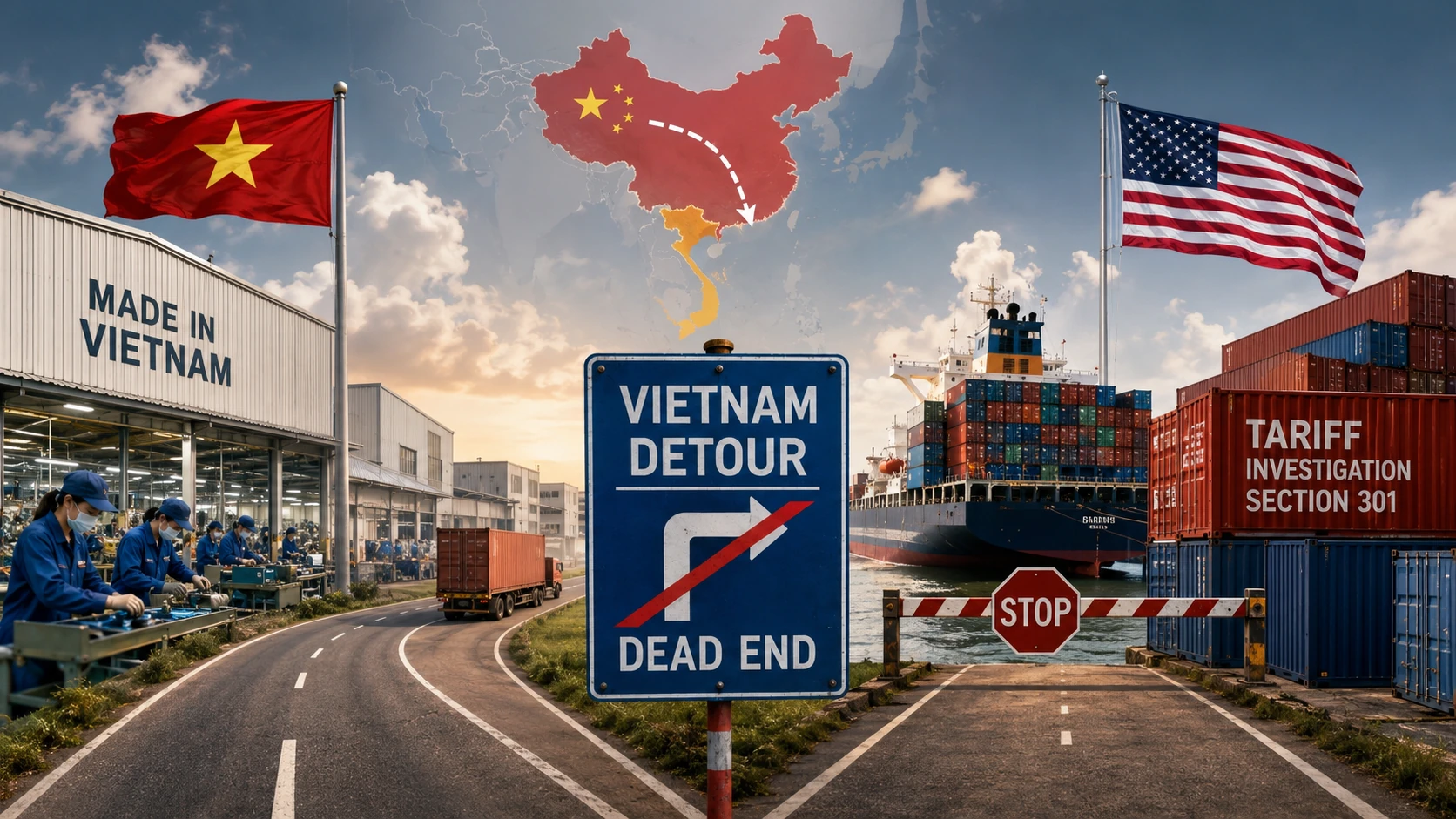
Vietnam’s Emergence as a Strategic Manufacturing Hub
Over the past decade, Vietnam has become a pivotal node in global manufacturing networks, particularly for Chinese exporters confronting escalating trade tensions with the United States. In response to punitive tariffs imposed during the early Trump administration, many companies sought to mitigate risk by relocating production facilities from China to Vietnam. This shift was underpinned by Vietnam’s competitive labor costs, political stability, expanding infrastructure, and preferential access to Western markets.
The influx of capital and rapid industrial park development transformed Vietnam into a major exporter of electronics, textiles, machinery, and solar components. This growth not only diversified supply chains but also positioned Vietnam as a significant beneficiary of the global reconfiguration of manufacturing.
Limitations of Geographic Diversification Alone
Despite the initial success of the “China Plus One” strategy, which combined maintaining Chinese production bases with supplementary operations in countries like Vietnam, new geopolitical realities have exposed its shortcomings. Governments are increasingly scrutinizing the actual origins of products, focusing on where value is genuinely added rather than merely where final assembly occurs.
This shift means that simply relocating factories to Vietnam no longer guarantees insulation from regulatory or political risks associated with China. Supply chains remain interconnected through ownership, component sourcing, and upstream manufacturing processes, which continue to tie products back to China.
Rising Importance of Origin Rules and Local Value Creation
With heightened geopolitical tensions, customs and trade authorities have intensified enforcement of rules of origin, demanding higher thresholds of local value addition for products to qualify for preferential treatment. Assembly alone is insufficient; companies must establish robust local supplier networks, regional procurement systems, and integrated industrial ecosystems.
This paradigm imposes significant capital and operational demands on firms, requiring deeper investments and long-term commitments rather than transient cost arbitrage. The era of leveraging simple tariff differentials through geographic shifts is diminishing.
Broader Implications for Globalization and Supply Chain Strategy
The challenges confronting Vietnam are emblematic of a wider transformation affecting multiple emerging manufacturing hubs across Southeast Asia, Latin America, and beyond. While diversification remains a strategic imperative, it no longer serves as a panacea for geopolitical risk mitigation.
Strategic considerations now dominate trade policy, particularly in sectors with national security implications such as semiconductors, batteries, renewable energy technologies, and telecommunications. Governments are prioritizing supply chain transparency, ownership structures, and genuine technological and industrial capabilities over mere production location.
Chinese Firms’ Strategic Adaptations
In response, many Chinese enterprises are evolving from seeking low-cost production sites to constructing comprehensive international industrial footprints. This includes developing local supplier bases, establishing regional management and R&D centers, and creating production facilities designed to serve multiple markets simultaneously.
The objective has shifted from obscuring product origins to becoming authentic global industrial players capable of integrating into diverse economic ecosystems. This approach aligns with long-term sustainability and resilience in a complex geopolitical environment.
Conclusion: The End of the Vietnam Shortcut
Vietnam will remain a critical manufacturing locale due to its skilled workforce, export-oriented infrastructure, and strategic position within Asia. However, the assumption that relocating factories there automatically mitigates geopolitical risk is increasingly outdated.
Future competitiveness will depend on the ability to generate substantive local value, maintain transparent and secure supply chains, and align with national security priorities. For Chinese exporters, the simplistic Vietnam bypass strategy is giving way to a more sophisticated, ecosystem-based global industrial approach.
Ultimately, the next phase of globalization will reward companies that build integrated international manufacturing and innovation networks rather than those relying solely on shifting production footprints across borders.
Can you afford not to expand abroad Talk to us, we’ll help you grow your business internationally.
Talk to us →