


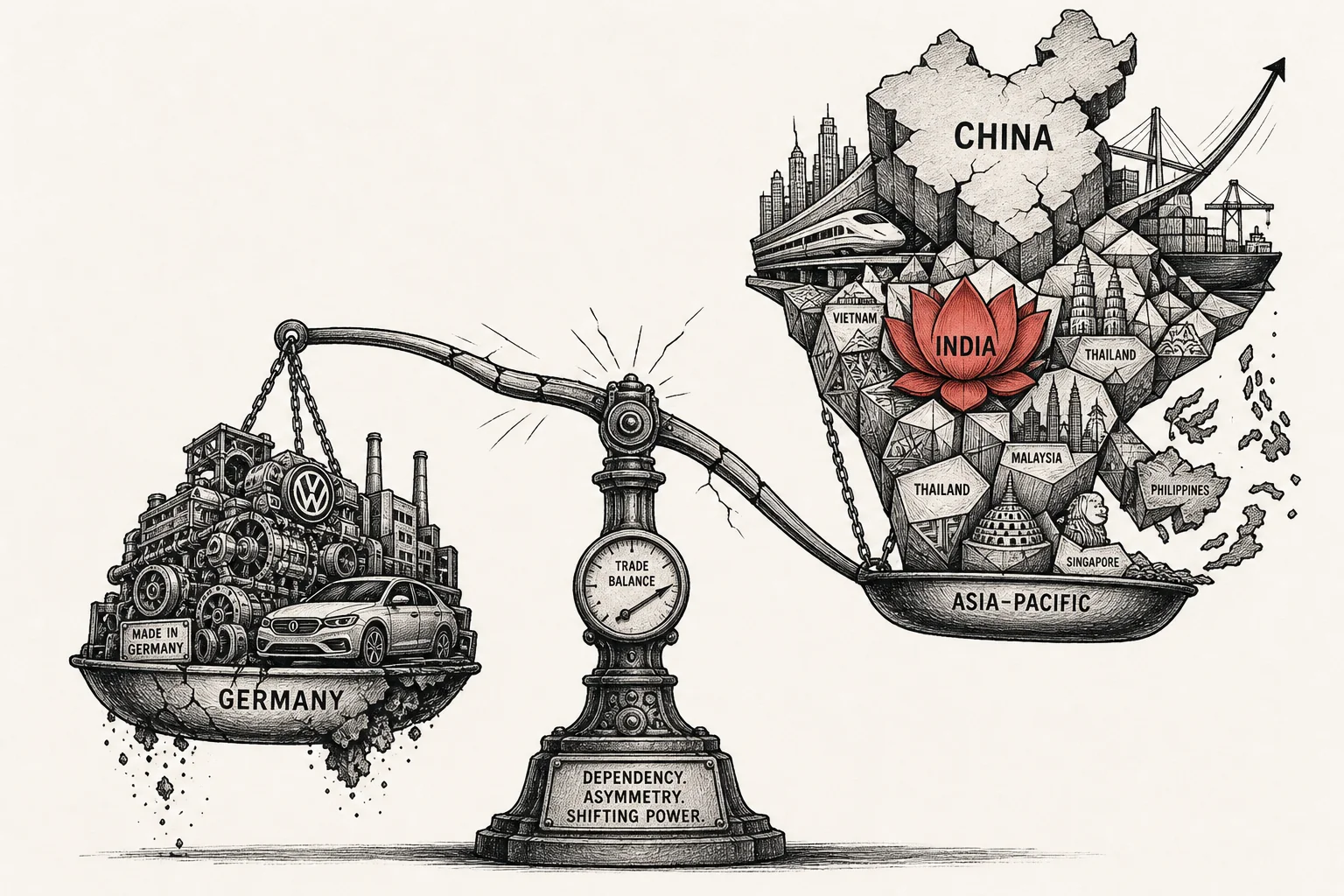
ising Trade Imbalance with Asia-Pacific

Germany is on course to record an unprecedented trade deficit with the Asia-Pacific region in 2026, with projections indicating a shortfall approaching €146 billion ($163 billion). This development is largely attributed to a significant decline in German exports to China, which more than offsets gains made in other countries within the region. According to a report by Germany Trade & Invest (GTAI), exports to 29 core Asia-Pacific economies are expected to contract by 3.2% to €185.3 billion, while imports from the region are forecast to increase by 6.4%, reaching €330.9 billion.
China’s Diminished Demand and Its Impact
China remains the dominant partner in Germany’s trade with Asia-Pacific, accounting for approximately half of the goods exchanged. The downturn in exports to China has a disproportionate effect on Germany’s overall trade balance with the region. Excluding China, German exports to Asia-Pacific would actually rise by 2.8% in 2026, and the trade deficit would narrow significantly to just under €35 billion.
The contraction in German exports to China is particularly pronounced in key industrial sectors. Machinery exports have declined by 18% in the first seven months of 2026 compared to the previous year, while automotive exports have fallen by 30%. German vehicle sales in China have nearly halved from their peak of over 5 million units. This decline reflects the increasing competitiveness of Chinese manufacturers in electric vehicles and their strategic advantage in battery supply chains, signaling a shift in market dynamics and technological leadership within the automotive sector.
Emerging Opportunities in India and Southeast Asia
While China’s reduced demand poses a challenge, other Asia-Pacific markets are gaining prominence for German exporters. India has emerged as a rapidly growing destination and source of imports, with German exports to India nearly doubling over the past decade. Imports from India are also diversifying beyond traditional sectors such as clothing, expanding into pharmaceuticals and machine components, indicating a broadening of industrial and technological ties.
The Association of Southeast Asian Nations (ASEAN) is similarly becoming an increasingly important trade partner. GTAI forecasts that German exports to the 11-member bloc will grow faster than imports in 2026, supported in part by aircraft deliveries. Over the longer term, ASEAN countries are evolving from suppliers of basic goods like clothing and footwear to key providers of electronics and electrical equipment, enhancing their strategic value in German supply chains.
Japan’s Steady Role Amid Currency Challenges
Japan continues to represent a stable market for German exporters despite the yen’s significant depreciation against the euro and US dollar over the past six years. The weakened yen has eroded Japanese purchasing power, yet the market remains resilient, underscoring the long-standing industrial and technological linkages between Germany and Japan.
Strategic Implications and Policy Considerations
German Chancellor Friedrich Merz’s visit to Japan, South Korea, and Singapore reflects a broader strategic intent to strengthen ties with middle powers in Asia. His call for a strategic alliance encompassing trade, technology, and security highlights the recognition of shifting geopolitical and economic realities. For Germany, addressing the growing trade deficit with Asia-Pacific requires recalibrating export strategies, fostering innovation, and deepening partnerships beyond China to maintain industrial competitiveness and technological leadership.
As Chinese domestic industries advance in high-tech manufacturing and electric vehicles, German exporters face intensified competition in their once-dominant markets. Simultaneously, the rise of India and ASEAN as diversified trade partners offers pathways to mitigate risks and capitalize on emerging growth opportunities. These dynamics will shape Germany’s trade policy and industrial strategy in the Indo-Pacific, with implications for supply chain resilience and long-term economic competitiveness.
Related Analysis
-
China Emerges as Dominant Buyer of Brazilian Oil Amid Iran Conflict Disruptions
-
Colombia’s Rising LNG Imports Signal Shifts in Energy Supply Amid Declining Domestic Gas Production and El Niño Risks
-
U.S. LNG Export Growth Accelerates Amid Capacity Expansion and Global Market Disruptions
-
Assessing the Plateau in Global Adoption of the Chinese Yuan Amid Shifting Geopolitical Dynamics
-
German Industry’s Strategic Stockpiling of Rare Earths Amid EU-China Trade Tensions
Source:
REUTERS
Can you afford not to enter the German market? Talk to us, we’ll help you succeed in Germany.
Talk to us →