


ntroduction to the Mercosur-EU Trade Partnership

The provisional implementation of the Mercosur-European Union Partnership Agreement, which commenced on May 1, 2026, marks a significant development in transatlantic trade relations. This agreement, connecting markets comprising approximately 720 million people with a combined GDP exceeding US$22 trillion, aims to enhance political dialogue, cooperation, and commercial exchange between the two blocs. The trade component of the agreement establishes a framework for tariff reductions and market access protocols that have begun to reshape Brazilian agribusiness exports to the EU.
Export Growth and Sectoral Performance
Data from Brazil’s Ministry of Agriculture and Livestock reveal that during the first five months of the agreement’s provisional enforcement, Brazilian agribusiness exports to the 27 EU member states rose by 14.8% in value compared to the same period in 2025, reaching US$12.21 billion. In volume terms, shipments increased by 8.1%, totaling 17.74 million tonnes. This growth reflects the competitive positioning of Brazilian agriculture and the initial benefits of preferential tariff treatment under the agreement.
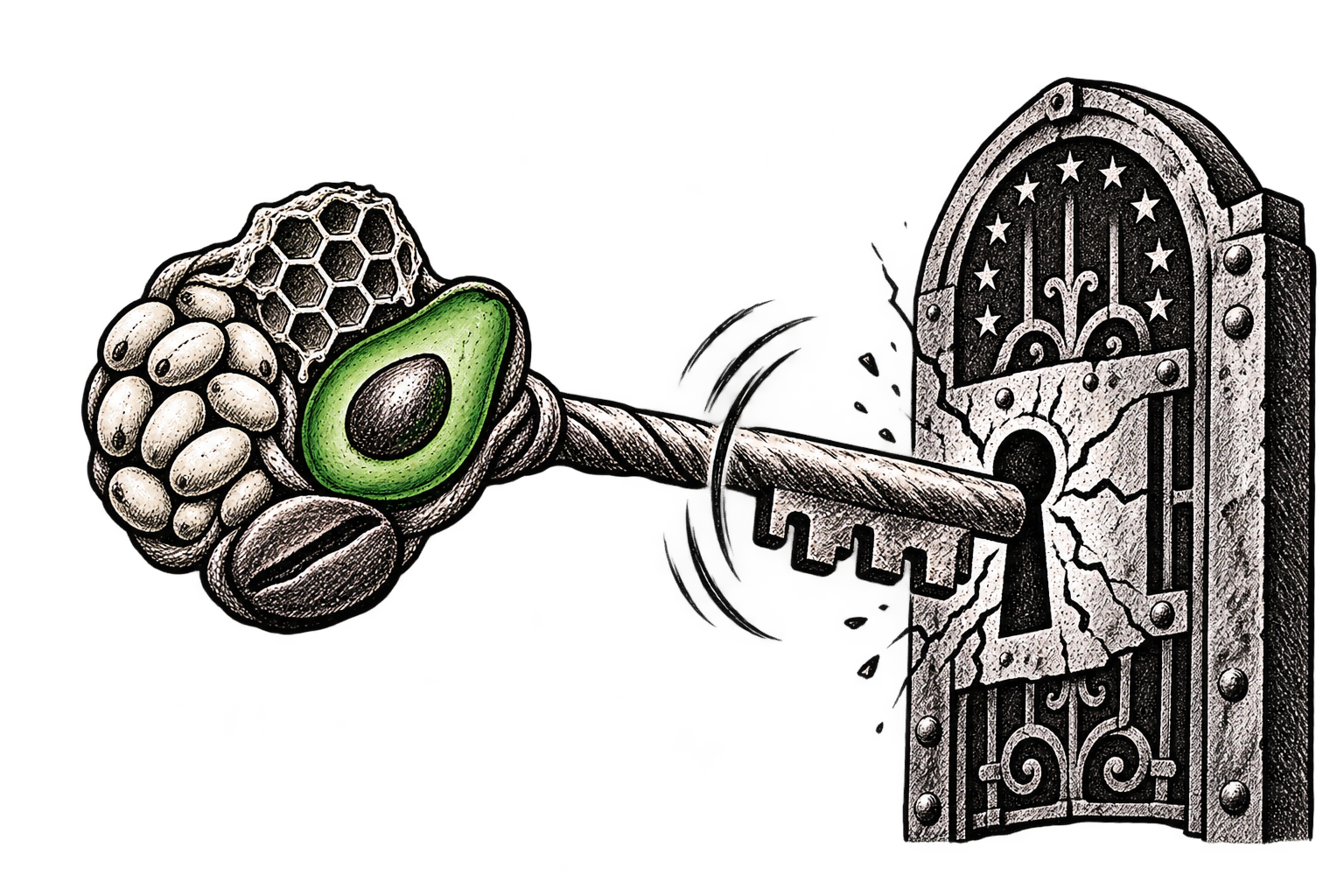
Key contributors to this export expansion include the soybean complex, meat products, apicultural goods, and fruits. The soybean complex remains the dominant export segment, with a 34.2% increase in value to US$4.19 billion and a 20.5% rise in volume. Soybean grains and meal both recorded substantial gains, underscoring their critical role in Brazil’s agricultural export profile.
Notable Product-Specific Advances
Among individual products, several exhibited exceptional growth rates. Apicultural products, particularly honey, surged by 367% in value, while other oilseeds excluding soybeans increased by 161%. Meat exports experienced a remarkable 103.5% value increase and a 170% volume rise, reflecting robust demand and improved market access. Fruits, including nuts and chestnuts, grew by 15% in value, with avocado exports standing out for a 421.2% value increase and a 433.7% volume rise.
Other commodities such as crude corn oil and coffee also recorded significant upward trends. Corn oil exports expanded by over 266% in value, and coffee—both roasted and soluble varieties—saw double-digit growth in export value and volume, reflecting diversification and deepening of Brazil’s export basket.
Impact of Tariff Preferences and Market Access
The agreement’s phased tariff reduction schedules, effective from May 2026, have begun to facilitate enhanced competitiveness for Brazilian products in the European market. Specific products such as roasted and soluble coffee and avocados have already benefited from tariff cuts, with complete tariff elimination scheduled by 2030. Additionally, the agreement outlines preferential access conditions for other significant agricultural exports, including beef, pork, poultry, sugar, ethanol, rice, honey, corn, and sorghum, often linked to import quotas tailored to each product.
These tariff preferences are expected to incrementally improve Brazil’s export dynamics as they are progressively implemented, allowing Brazilian producers to capitalize on improved price competitiveness and market penetration.
Trade Balance and Import Dynamics
While Brazilian imports of agro-industrial products from the EU also increased modestly by 3.3% in value and 6.8% in volume during the same period, the agribusiness trade balance remains strongly favorable to Brazil. The surplus expanded by 17% to US$10.54 billion, underscoring the competitive strength of Brazil’s agricultural sector and the strategic advantage gained through the trade agreement.
Compliance with Sustainability and Regulatory Standards
Access to the European market necessitates strict adherence to sanitary, environmental, and traceability standards. The Brazilian government, in coordination with the Ministry of Foreign Affairs and private sector stakeholders, is advancing initiatives to ensure compliance with these requirements, including the European Union’s Deforestation Regulation (EUDR). Certification and traceability mechanisms are critical to maintaining market access, particularly for sensitive supply chains such as soy, meat, coffee, and forestry products.
In 2026, the Agro Brazil + Sustainable platform introduced the Socio-Environmental Analysis Report for Export Operations (RASOE), providing a comprehensive assessment of rural properties’ compliance with Brazilian environmental and social legislation. This tool supports exporters in demonstrating conformity with international buyer expectations and regulatory frameworks.
Strategic Outlook and Implications
The initial six months of the Mercosur-EU agreement’s provisional application reveal promising trends for Brazilian agribusiness, combining export growth, market diversification, and enhanced trade surplus. The gradual implementation of tariff reductions, coupled with stringent compliance with environmental and sanitary regulations, will be pivotal in sustaining and expanding these gains.
Monitoring commercial flows and regulatory developments will be essential for stakeholders to fully leverage the agreement’s provisions. The evolving trade landscape presents opportunities for Brazil to reinforce its position as a leading global agricultural supplier while navigating the complexities of international market standards and geopolitical trade dynamics.
Related Analysis
-
China-Brazil Trade Expansion Driven by Electric Vehicle Growth and Strategic Energy Shifts
-
EU Adapts Trade Surveillance to Address Rising Chinese Imports Amid Escalating Tensions
-
Europe’s Strategic Response to China’s Expanding Trade Influence Amid Rising Global Barriers
-
German Industry’s Strategic Stockpiling of Rare Earths Amid EU-China Trade Tensions
-
EU-China Trade Dialogue Yields Progress on Hybrid Vehicle Market Access and Rare Earths
Source:
GOV.BR
Can you afford not to enter the Brazilian market? Talk to us, we’ll help you succeed in Brazil.
Talk to us →