


Revisiting the 1990s: A Decade of Transformative Leadership
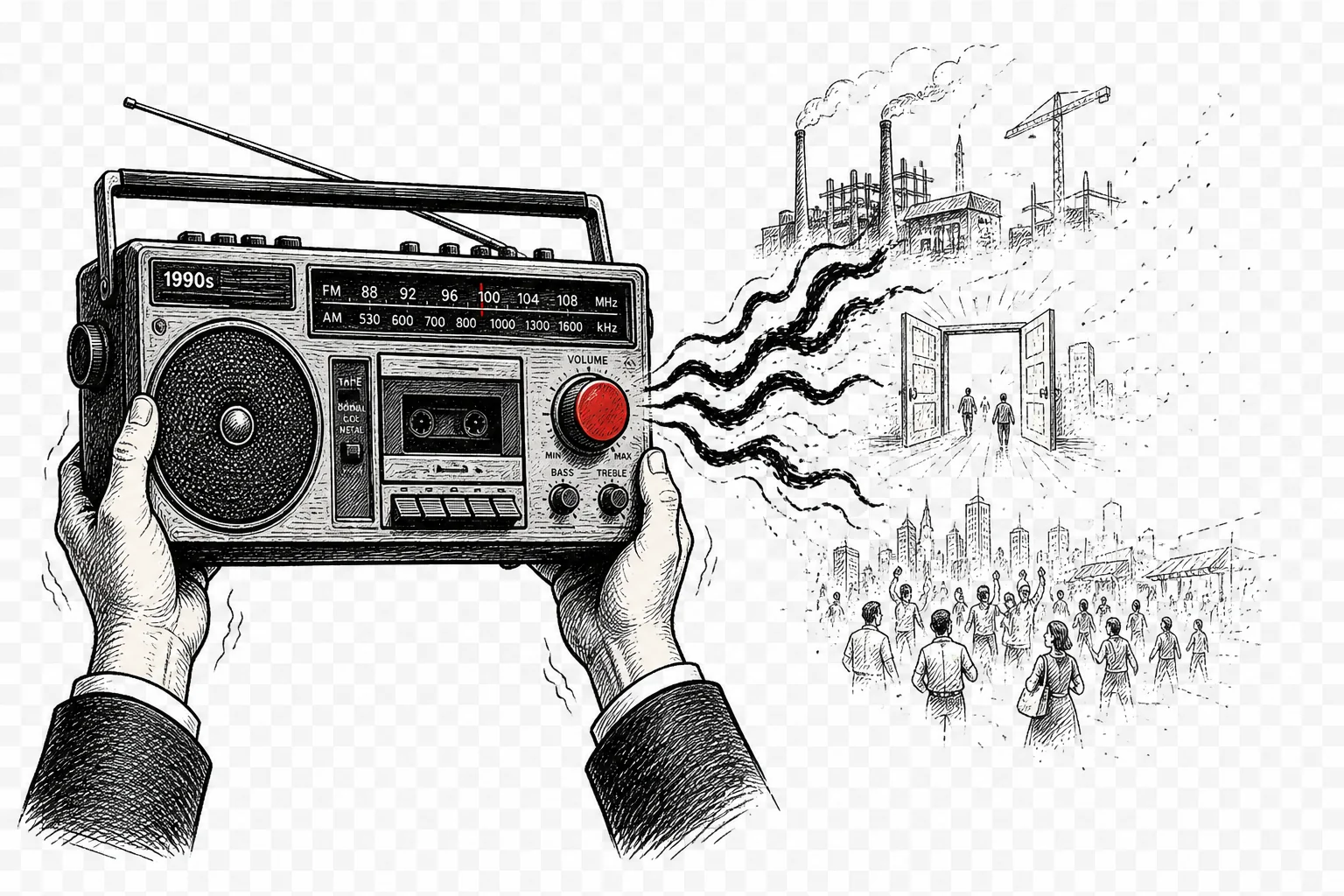
State television in China recently revisited the 1990s through a prime-time documentary commemorating the centenary of Jiang Zemin’s birth. This period, marked by Jiang’s leadership and Zhu Rongji’s premiership, is recalled as a time of significant economic reform and political boldness. The decade is framed between two pivotal moments: the 1989 Tiananmen crackdown and China’s accession to the World Trade Organization in 2001. Viewers are drawn not only to the achievements of the era but also to the perceived accessibility and charisma of its leaders, a stark contrast to the current leadership’s more restrained public demeanor.
Leadership Style and Public Perception
The documentary highlights Jiang’s informal and personable style, showcasing moments such as his engagement with athletes and cultural performances abroad. Zhu Rongji, who passed away recently, is remembered for his pragmatic, results-driven approach to governance, emphasizing efficiency and directness in implementing reforms. These portrayals have sparked online discussions praising their forthrightness and effectiveness, implicitly critiquing the contemporary political environment’s cautiousness and rigidity. The veneration of Zhu by diverse societal groups underscores a yearning for decisive and visionary governance.
Nostalgia Amid Economic Challenges
Beyond leadership style, the resurgence of 1990s nostalgia reflects current economic malaise. With constrained job markets, a stagnant property sector, and entrepreneurial difficulties, public optimism has waned. However, direct discourse on economic issues faces censorship, pushing citizens to express discontent indirectly through reminiscence of a more hopeful era. The 1990s are remembered as a time when opportunities seemed more abundant, especially for urban populations benefiting from expanding education and industrialization, even as rural poverty remained widespread.
Reformist Legacy and Political Context
While Jiang and Zhu are often labeled reformists, their political reforms were limited and primarily aimed at consolidating Communist Party control. Their economic strategy involved selective modernization of state-owned enterprises, maintaining state dominance over critical sectors while allowing market mechanisms in others. This approach entailed significant social costs, including mass layoffs, but ultimately facilitated China’s integration into the global economy. Contemporary leaders face a more complex environment, including ongoing trade tensions and slower economic growth, with fewer signs of comparable reformist zeal.
Implications for China’s Political and Economic Trajectory
The juxtaposition of 1990s leadership with today’s governance highlights a broader tension within China’s political economy: the balance between control and openness, reform and stability. The nostalgia for a period characterized by relative openness and dynamic reform suggests underlying public desires for renewed economic vitality and more relatable leadership. As China navigates its current challenges, the legacy of Jiang and Zhu serves both as a benchmark and a reminder of the political and economic trade-offs inherent in its development model.
Source:
Economist
Can you afford not to enter the Chinese market? Talk to us, we’ll help you succeed in China.
Talk to us →