


Introduction to Denza Z’s Market Ambitions
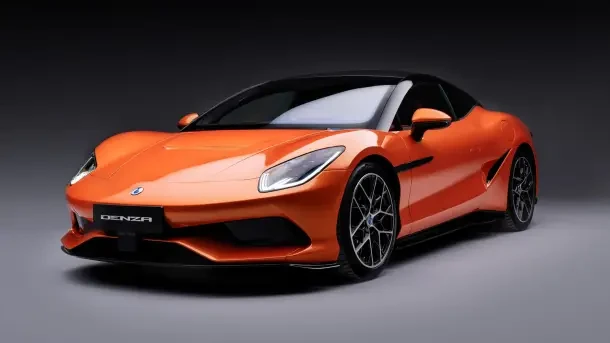
The electric vehicle (EV) sector is witnessing a significant evolution with the launch of the Denza Z, a battery-electric supersport car developed by Denza, a brand under the BYD conglomerate. This model is positioned to rival established European and American manufacturers by delivering superior performance metrics and leveraging a distinct technological approach.
Performance Metrics and Design Innovations
The Denza Z is equipped with a tri-motor setup—one at the front axle and two at the rear—generating a combined output of approximately 1,180 kW or 1,600 horsepower. This powertrain enables acceleration from zero to 100 kilometers per hour in an exceptional 1.96 seconds, with a top speed reaching 350 kilometers per hour. These figures place the vehicle firmly within the hypercar category, directly challenging competitors such as Porsche, Ferrari, and Tesla.
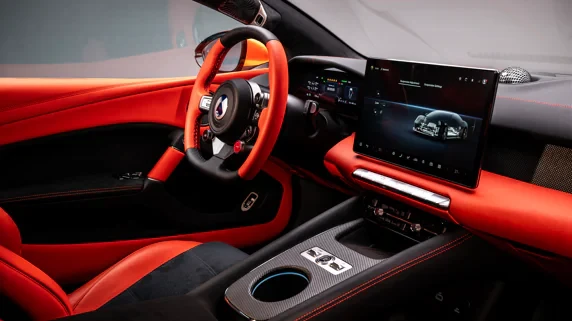
Distinctively, the Denza Z incorporates a 2+2 seating configuration, diverging from the typical two-seat layout common in this segment. This design choice enhances practicality by accommodating four passengers along with luggage space, thereby broadening the vehicle’s usability without compromising performance. The model will be available in multiple body styles, including coupe, spider, and a racing variant. Additionally, a Nürburgring edition is planned to pursue record-setting lap times on the famed Nordschleife circuit.
Battery Technology: Advancing LFP Chemistry
One of the Denza Z’s most notable technological differentiators lies in its battery chemistry. Unlike the prevalent nickel-manganese-cobalt (NMC) cells used in high-performance EVs, Denza employs the second-generation Blade Battery utilizing lithium-iron-phosphate (LFP) chemistry. Traditionally, LFP batteries offer enhanced safety and durability but at the expense of lower energy density.
BYD has addressed these limitations by optimizing electrode structures and refining the solid electrolyte interphase (SEI) layer, resulting in improved energy density and enabling ultra-fast charging capabilities. The battery pack is estimated to have a capacity of around 120 kWh, balancing range, longevity, and safety considerations.
Charging Innovation: Flash-Charging Capability
The Denza Z introduces a charging innovation termed ‘Flash-Charging,’ capable of replenishing the battery from 10 percent to 97 percent state of charge within nine minutes. Achieving this rapid charge requires an infrastructure capable of delivering up to 1,500 kW, which significantly exceeds the power output of current Combined Charging System (CCS) stations in Europe and other markets.
While charging times may extend under extreme cold conditions, this technology has the potential to transform user acceptance of high-performance electric vehicles, provided the necessary charging infrastructure is deployed at scale.
Strategic Implications for the Global Automotive Landscape
The introduction of the Denza Z signals a strategic shift by Chinese manufacturers from competing solely in the mass-market EV segment to directly engaging premium and performance sectors. The vehicle’s features—including adaptive damping systems (DiSus-M), all-wheel drive, and a performance-optimized platform (e3)—underscore this ambition.
Market reception in Europe and beyond will depend on factors such as pricing, brand perception, and the availability of compatible high-power charging networks. Nevertheless, the Denza Z exemplifies the rapid transformation occurring within the global automotive industry, suggesting that the future of electric supersport cars may be increasingly shaped by Chinese technological innovation and industrial capacity.
Can you afford not to expand abroad Talk to us, we’ll help you grow your business internationally.
Talk to us →