


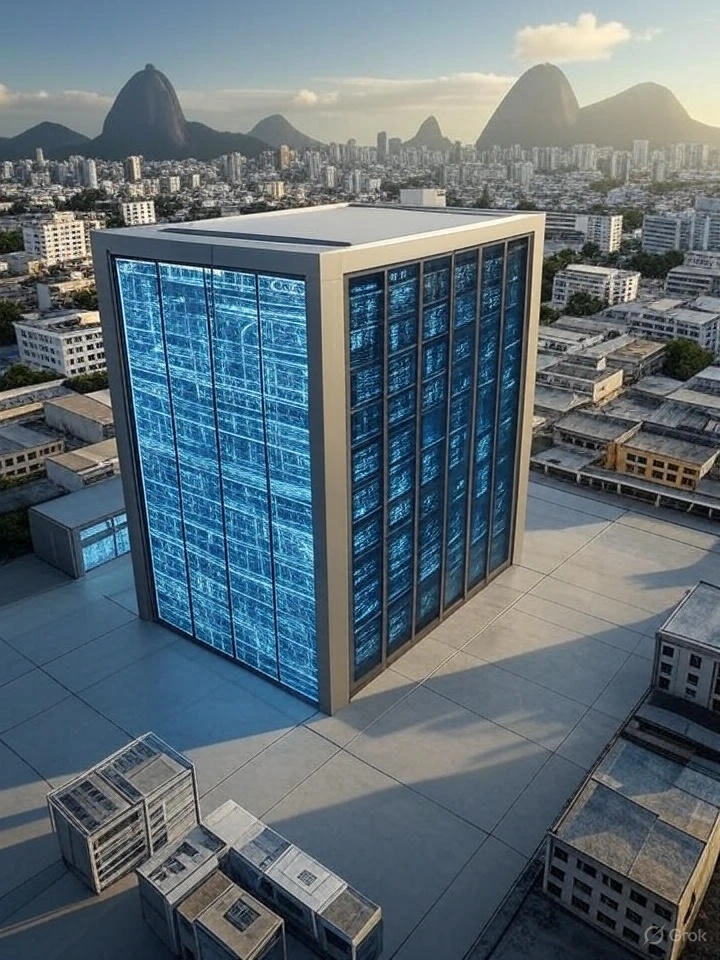
Strategic Vision for Brazil’s Digital Infrastructure
Brazil has unveiled a comprehensive strategy to secure a substantial role in the expanding global data center market. Central to this plan is the launch of an ambitious $65 billion project, dubbed “Rio AI City,” aimed at transforming Rio de Janeiro into a leading hub for artificial intelligence and data processing capabilities. This initiative reflects Brazil’s intent to become a pivotal location for digital infrastructure in the coming decade.
Rio AI City: Scale and Scope
Formalized through a memorandum of understanding between the Rio city administration and key federal entities including the Brazilian Development Bank (BNDES), the Rio AI City project targets a data center capacity of 3 gigawatts by 2032. The selected site in Barra da Tijuca benefits from favorable regulatory and tax conditions, as highlighted by Mayor Eduardo Paes. The city’s infrastructure advantages include robust fiber optic networks and a skilled labor pool, which are critical components for supporting large-scale data operations.
Renewable Energy as a Competitive Advantage
Brazil’s energy profile constitutes a distinctive competitive edge in the data center landscape. The country’s electricity generation is predominantly derived from renewable sources, with over 84% of its power already sourced from clean energy ahead of its 2030 target. This contrasts with other prominent data center locations such as Ireland and Virginia, where rising public scrutiny over the environmental impact of data centers poses challenges. Brazil’s expanding solar and wind capacities, projected to reach 47 gigawatts and 31 gigawatts respectively by 2030, position it well to meet the high energy demands of data centers sustainably.
Fiscal Incentives and Regional Development
To further stimulate investment, the Brazilian government is introducing tax incentives that could reduce the fiscal burden on data center projects by up to 52%. These measures particularly emphasize development in the country’s less industrialized Northeast region, which possesses surplus energy capacity and stands to benefit from economic diversification. The government’s approach aims to balance national digital infrastructure growth with broader socioeconomic objectives.
Financial Support and Industry Concerns
The BNDES is actively supporting the sector through a dedicated fund for data center and AI infrastructure investments, initially capitalized between $90 million and $180 million, with ambitions to scale up to $900 million including private sector contributions. Since 2023, the bank has already allocated over $300 million to data infrastructure projects. However, industry leaders caution against regulatory complexity. Alessandro Lombardi, CEO of Elea Data Centers, emphasizes the need for clear and streamlined policies to attract and retain investment, warning that overlapping legislative proposals could deter potential investors.
National AI Strategy and Socioeconomic Goals
Brazil’s efforts extend beyond infrastructure towards a comprehensive national AI strategy, with government commitments exceeding $4 billion in investments through 2028. The strategy underscores artificial intelligence as not only a driver of innovation but also a matter of national sovereignty and social equity, as articulated by Science Minister Luciana Santos. The integration of AI development with inclusive growth objectives signals Brazil’s ambition to leverage technology for broader societal benefits.
Outlook: Balancing Innovation, Regulation, and Sustainability
The convergence of Brazil’s renewable energy assets, federal support, and rising global demand for data services creates a unique opportunity for the country to emerge as South America’s technological nexus. Success will depend on Brazil’s ability to implement investor-friendly regulations while preserving its environmental advantages. Achieving this balance will be critical to securing long-term strategic and economic benefits in an increasingly competitive and sustainability-conscious global tech landscape.
Can you afford not to expand abroad Talk to us, we’ll help you grow your business internationally.
Talk to us →