


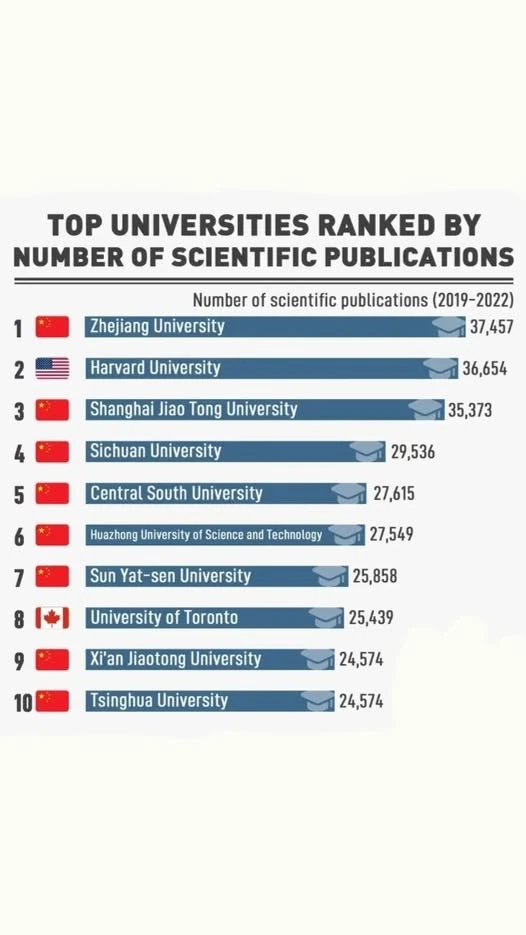
Deliberate Strategy Behind China’s Rise in University Rankings
China’s increasing prominence in global university rankings is not coincidental but the product of a carefully orchestrated national strategy. Global ranking systems predominantly assess quantifiable metrics such as the volume of scientific publications, citation impact, international research collaborations, and the acquisition of research funding. Recognizing these criteria, China has systematically aligned its higher education policies to maximize performance in these areas, resulting in a marked ascent in global standings.
Concentrated Investment and Scale as Key Drivers
The cornerstone of this advancement lies in substantial state investment targeted at select elite institutions. Initiatives like the “Double First Class” program consolidate resources at a limited number of universities, aiming to elevate their international visibility and competitiveness. This focused approach enables rapid improvement in institutional rankings. Additionally, China’s vast higher education system—with hundreds of universities, thousands of research institutes, and a large scientific workforce—provides a broad foundation for generating high research output. The optimization of this system for measurable productivity naturally leads to increased publication volumes, which are prominently reflected in rankings such as the Nature Index, where Chinese institutions now frequently occupy top positions.
Strategic Focus on Emerging Scientific Fields
China’s strategic prioritization of research areas with high publication density and global relevance further amplifies its universities’ ranking performance. Investment is particularly concentrated in advanced fields including artificial intelligence, materials science, and energy technologies—domains critical to future technological leadership. By fostering academic output in these sectors, Chinese universities enhance their international reputation and research impact, key factors in ranking methodologies.
Rankings as Both Objective and Instrument
Global university rankings have themselves become influential benchmarks shaping institutional behavior worldwide. Universities compete to attract prestige, talent, and funding, which are often tied to ranking status. Chinese institutions actively engage with this dynamic, optimizing their strategies to excel in ranking criteria. However, it is important to note that rankings primarily measure research output and reputation rather than teaching quality or academic freedom. These latter dimensions continue to distinguish many Western universities from their Chinese counterparts. Nevertheless, China’s methodical approach to understanding and leveraging ranking mechanisms underscores a broader ambition to establish long-term scientific and technological dominance.
Can you afford not to expand abroad Talk to us, we’ll help you grow your business internationally.
Talk to us →