


ntroduction: A New Contender in AI Chip Technology

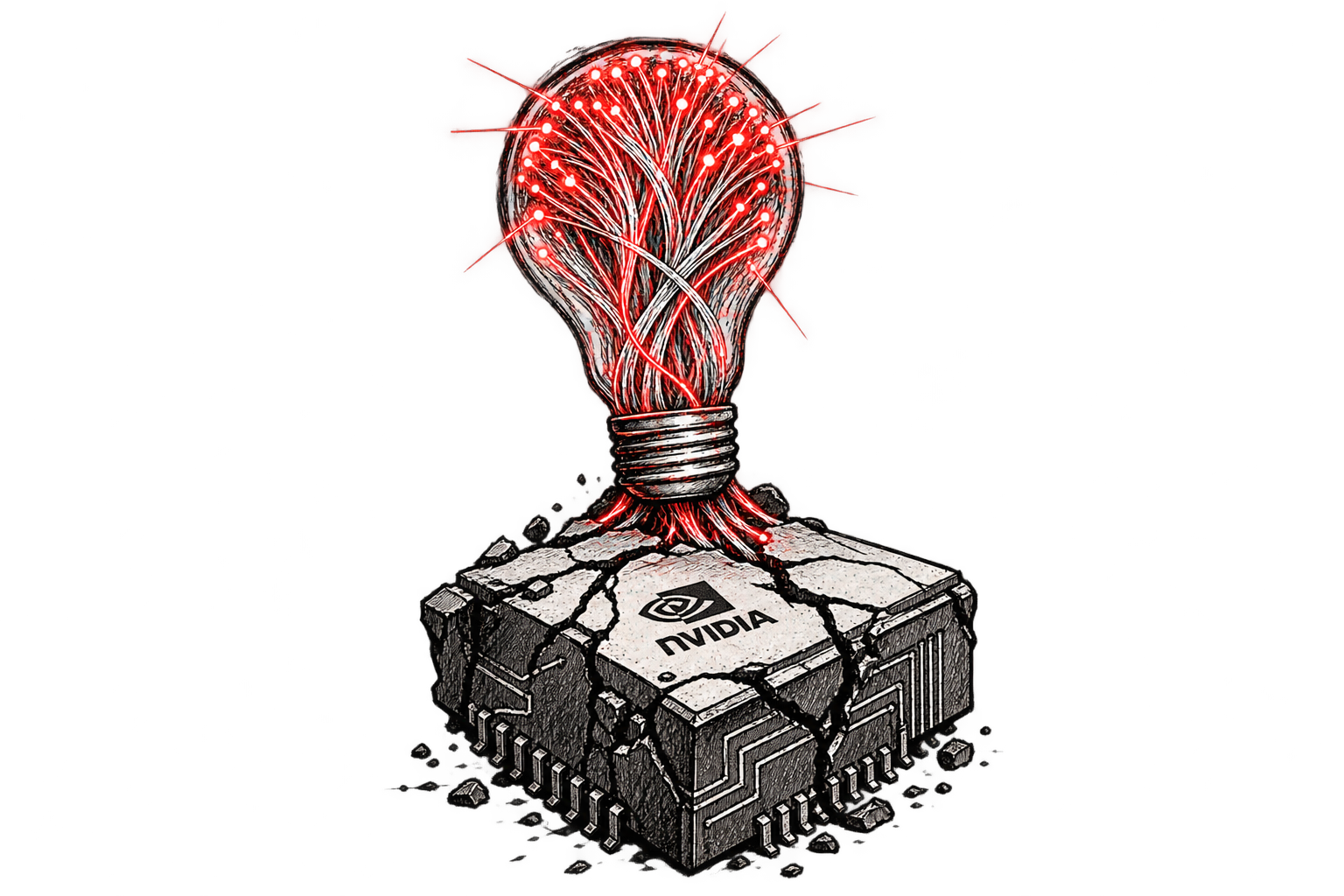
In the rapidly evolving landscape of artificial intelligence hardware, Nvidia has established an almost unchallenged position with its graphics processing units (GPUs). However, a German startup named Q.ant, founded by physicist-turned-entrepreneur Michael Förtsch, is seeking to redefine this domain. Q.ant’s innovation lies in a photonic neural processing unit (NPU) that computes with light rather than electricity, potentially delivering performance improvements that could reshape AI hardware paradigms.
Technological Innovation: Photonic Computing as a Game Changer
Q.ant’s NPU represents a fundamental departure from traditional digital computing architectures. Unlike Nvidia’s GPUs, which rely on electronic signals and binary logic, Q.ant’s chip leverages analog computation through light emitted by microscopic lasers. This light is manipulated via optical structures, enabling the processor to perform complex, nonlinear algebraic operations with significantly reduced energy consumption. The chip reportedly operates up to fifty times faster and consumes thirty times less power than comparable Nvidia GPUs.
This analog approach aligns more closely with natural processes, avoiding the energy-intensive data shuttling between memory and processors typical of digital systems. Such efficiency gains are particularly relevant for AI workloads like generative image processing, where the chip has demonstrated the ability to convert photographs into pixel art at a fraction of the power cost.
Market Challenges: The Valley of Death and Ecosystem Development
Despite its technological promise, Q.ant faces the classic ‘valley of death’ challenge common to breakthrough hardware innovations. The chip is now commercially available through cloud provider Ionos, but widespread adoption depends on cultivating a robust software ecosystem. This requires integrating the NPU into numerous data centers and making it accessible to a broad developer base to stimulate application development.
Building such an ecosystem demands substantial investment and coordinated effort. The entrenched position of Nvidia, with decades of software development behind its CUDA platform, underscores the scale of this challenge. Industry experts emphasize that developing a competitive software environment is a long-term endeavor, requiring a concerted strategy that extends beyond hardware capabilities.
Geopolitical and Industrial Implications for Europe
Q.ant’s emergence carries significant geopolitical weight. Europe’s technological sovereignty in AI hardware is currently constrained by dependence on US-based companies like Nvidia. Q.ant’s photonic chip offers a path toward reducing this reliance, aligning with broader European ambitions for technological independence and strategic resilience.
The company’s main industrial backer, German machine tool giant Trumpf, and investors including US-based technology fund Duquesne, reflect a transatlantic interest in nurturing alternative AI hardware solutions. However, the pace of adoption and support within Germany remains cautious, with Förtsch noting slower decision-making processes compared to the agility observed in the US tech sector.
Competitive Landscape and Future Outlook
Internationally, Q.ant is not alone in pursuing photonic AI chips. Competitors in the US, China, and the UK are also advancing similar technologies, with Nvidia itself investing billions into photonics startups to maintain technological leadership. Against this backdrop, Q.ant’s ability to scale production, secure major customers, and foster software development will be critical to its success.
Manufacturing is currently conducted in small series at the Institute for Microelectronics Stuttgart, emphasizing precision and speed in production. The company is at a pivotal juncture, having achieved a breakthrough with a notable customer, though broader market validation remains pending.
Conclusion: Strategic Significance of Q.ant’s Innovation
Q.ant’s photonic chip embodies a potentially transformative approach to AI hardware, promising enhanced performance and energy efficiency that could challenge Nvidia’s dominance. However, realizing this potential depends on overcoming significant market and ecosystem hurdles, requiring substantial investment and coordinated industrial and governmental support.
For Europe, Q.ant represents a strategic opportunity to assert technological autonomy in a critical sector underpinning future economic competitiveness and national security. The coming years will determine whether this German startup can transition from a promising innovator to a key player shaping the global AI hardware landscape.
Related Analysis
-
Global Dynamics in Clean Energy Investment: Strategic Implications for Technological and Economic Leadership
-
Geopolitical and Industrial Implications of ASML’s EUV Technology and U.S.-China Export Controls
-
China’s Dominance in Rare Earths: Strategic Implications for Global Technology Leadership
-
Emerging German Startup Tensordyne Challenges Nvidia’s Dominance with Energy-Efficient AI Chips
-
Global Distribution and Strategic Significance of Clinical Trials by Country
Source:
WirtschaftsWoche
Can you afford not to enter the German market? Talk to us, we’ll help you succeed in Germany.
Talk to us →